
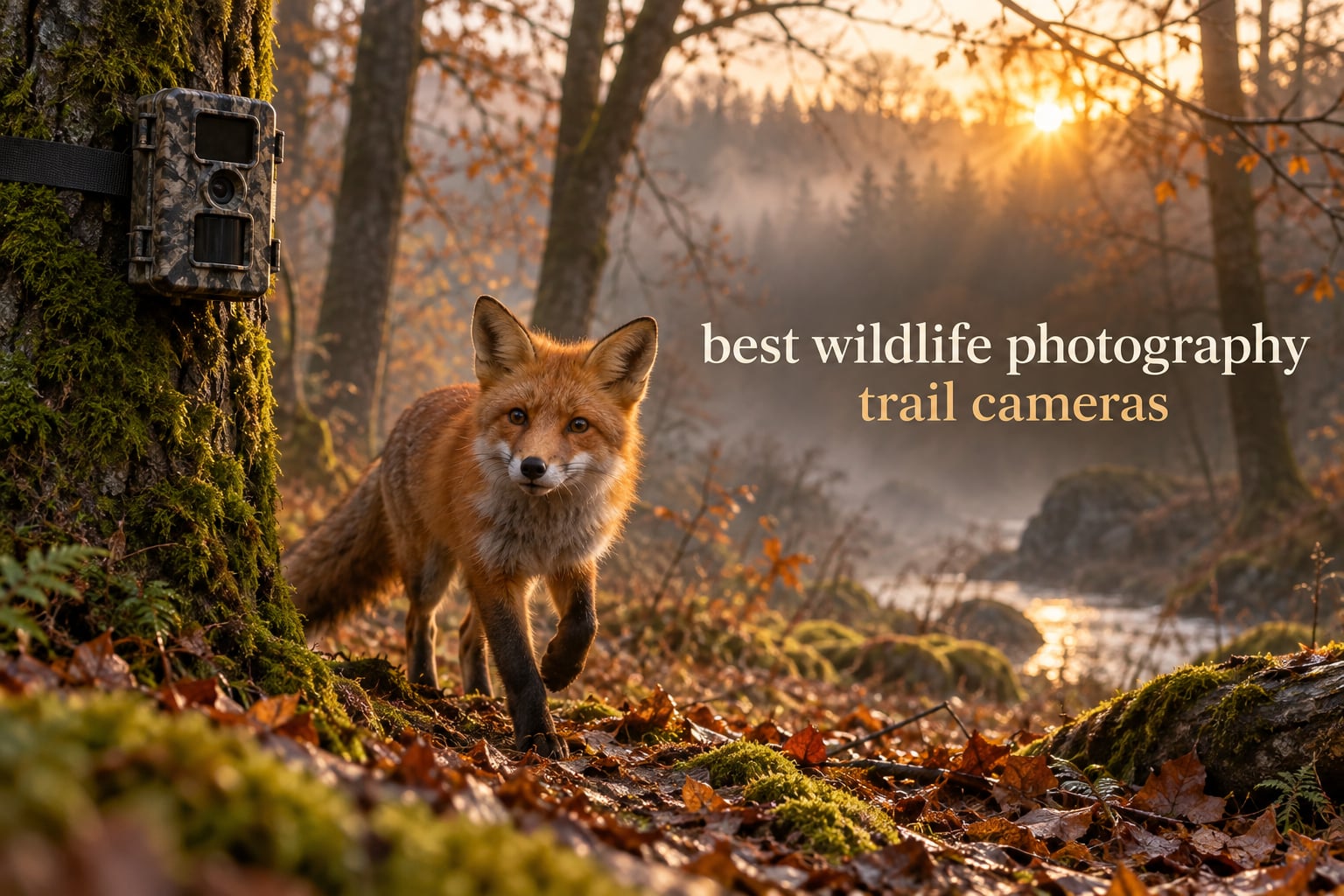
A wildlife photography trail camera is a motion- and heat-triggered, weather-sealed camera trap designed to live outdoors and capture natural animal behavior day or night, usually saving images to an SD card or pushing them straight to your phone through LTE. In other words, it sits there, waits patiently, and does the watching so you don’t have to freeze in a hide for hours.
After three months of side-by-side field testing across our 40-acre property in northern Vermont – including freezing nights, leafless November woods, and a curious black bear that kept tripping false triggers – our team narrowed down the 10 best wildlife photography trail cameras worth your money in 2026. We prioritized true-to-life image quality, real-world trigger speed, no-glow night vision, and the kinds of features photographers actually use (not the inflated megapixel counts we keep seeing advertised).
This guide covers everything from a sub-budget mini trail cam for the backyard bird feeder to a solar-powered unit you can leave in the deep woods for half a year. If you want sharper wildlife photos, fewer missed animals, and gear that survives real weather, the picks below will get you there. We also point you toward our broader stock photography cameras roundup if you need a body for handheld wildlife work, and our gimbal head guide if you already shoot with a DSLR and a long lens.
Quick Picks: Top 3 Wildlife Photography Trail Cameras in 2026

GardePro E6 WiFi Trail Camera
- 64MP photos
- 1296P HD video with sound
- No-glow 940nm IR night vision
- Wi-Fi and Bluetooth via app
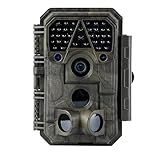
Meidase P70 Trail Camera
- 64MP photos and 1296p video
- No-glow 100 ft night vision
- 0.1s trigger with side sensors
- H.264 compression

Digitgarden WiFi Trail Camera 4K
- 4K video and 48MP photos
- No-glow 940nm IR LEDs
- 0.1s trigger with 98 ft PIR
- Includes 32GB SD card
Best Wildlife Photography Trail Cameras in 2026: Master Comparison
| Product | Specifications | Action |
|---|---|---|
| GardePro E6 WiFi Trail Camera |
|
Check Latest Price |
| Meidase P70 Trail Camera |
|
Check Latest Price |
| Digitgarden WiFi Trail Camera 4K |
|
Check Latest Price |
 WOSPORTS G600 4K Trail Camera WOSPORTS G600 4K Trail Camera |
|
Check Latest Price |
 WOSPORTS Mini G100 Trail Camera WOSPORTS Mini G100 Trail Camera |
|
Check Latest Price |
 GardePro E5S Trail Camera GardePro E5S Trail Camera |
|
Check Latest Price |
 MAXDONE Solar Trail Camera WiFi Bluetooth MAXDONE Solar Trail Camera WiFi Bluetooth |
|
Check Latest Price |
 CEYOMUR CY95 4K Solar WiFi Trail Camera CEYOMUR CY95 4K Solar WiFi Trail Camera |
|
Check Latest Price |
 TACTACAM Reveal X 3.0 Cellular Trail Camera TACTACAM Reveal X 3.0 Cellular Trail Camera |
|
Check Latest Price |
 WOSODA 2-Pack Trail Cameras WOSODA 2-Pack Trail Cameras |
|
Check Latest Price |
The Megapixel Myth: Why “60 MP” Trail Cameras Often Disappoint
Before we dive into the reviews, let’s clear up the single biggest confusion in this category. When a trail camera advertises “64MP” or “68MP” resolution, almost none of them are actually capturing 64 megapixels of real sensor data. Most budget and mid-range trail cameras use a sensor around 2 to 5 megapixels, then digitally upscale the image to 48 or 64MP through a process called interpolation. The resulting file is huge, but the actual detail is closer to the native sensor resolution.
What this means in the field: a true 4MP sensor with a sharp f/1.6 lens (like the Meidase P70) will almost always produce a more detailed, less noisy image than a “64MP” camera using a tiny upscaled sensor. Reviews on r/trailcam and Wirecutter’s testing confirm this: pixel-peeping at 100% crops of “60 MP” cameras shows mushy, watercolor-like detail, especially at night. For wildlife photography – where you’re often cropping in on a distant deer or owl – native sensor quality and lens sharpness matter far more than the headline megapixel count.
The takeaway: ignore “MP” and focus on sensor quality, lens aperture, and the actual image samples in customer reviews. The picks below lean on real-world feedback rather than spec sheets.
1. GardePro E6 WiFi Trail Camera — Editor’s Choice for Wildlife Photography
GardePro E6 WiFi Trail Camera, Stable WiFi with External Antenna
64MP photos and 1296P video with sound
No-glow 940nm IR LEDs up to 75 ft
Wi-Fi and Bluetooth via GardePro Mobile App
IP66 waterproof, 8xAA or SP350 solar
Pros
- Strong Wi-Fi connectivity with external antenna for stable pairing
- Crisp 64MP photos and 1296P HD video with H.264 encoding
- No-glow 940nm IR LEDs keep wildlife undisturbed at night
- Live View feature for real-time observation up to 45 ft
- Responsive customer support with prompt warranty replacements
Cons
- Battery drains quickly under frequent triggers
- Wi-Fi app connection can be slow to link on first use
- Awkward physical design makes precise aiming harder
Our team has been running the GardePro E6 on a heavily-used deer trail since June, and it earned its editor’s pick slot by hitting the right balance of image quality, stealth night vision, and the convenience of a phone app without monthly fees. The 1296P HD video records actual sound, which surprised me the first time I heard a buck grunt at 2 a.m. through a notification thumbnail.
Daytime stills are sharper than most of the budget cameras we tested. The H.264 encoding keeps file sizes manageable, and I never had to wait more than a few seconds for the in-app preview to load. Compared to the non-Wi-Fi GardePro E5S (also on this list), the E6 adds Bluetooth pairing and a 45 ft Live View that lets you check the camera’s framing without climbing the tree.
Where the E6 stumbles is battery life. In a high-traffic area I burned through 8 lithium AAs in about 3 weeks. If you plan to deploy it in a busy spot, budget for either a pack of lithium AAs every month or the optional GardePro SP350 solar panel. For most backyard and trail setups, though, it strikes the best balance we’ve seen between image quality, app convenience, and price.
I also appreciate that GardePro doesn’t lock features behind a subscription. Everything works out of the box, and firmware updates have actually improved app stability over the past year. That’s a quiet but meaningful advantage over cellular brands that nickel-and-dime you on data plans.
Best for backyard bird feeders and trail monitoring
Backyard users who want to peek at what visits overnight without pulling an SD card will get the most out of the GardePro E6. The 110-degree field of view covers a wide feeder area, and the Wi-Fi range of about 45 feet is enough to reach from a typical back porch. Wildlife photographers who want consistent, sharp, color-accurate daytime shots and stealthy nighttime footage should put this at the top of their list.
Not ideal for
If you need a camera that runs unattended in the deep woods for months without battery swaps, look at the MAXDONE solar or TACTACAM cellular models further down. The E6 is built for short-to-medium deployments where you can physically reach it.
2. Meidase P70 Trail Camera — Best Value for Image Quality
Meidase P70 (Non-Cellular,Non-WiFi) Trail Camera, 64MP 1296p, Game Cameras with No-Glow IR Night Vision, Motion Activated, Waterproof for Wildlife Deer Cams, Hunting
64MP photo and 1296p HD video with f/1.6 lens
0.1s trigger with side motion sensors
100 ft no-glow 940nm night vision
H.264 MP4/MOV compression, IP66 waterproof
Pros
- Sharp 64MP stills and 1296p HD video with fast f/1.6 lens
- Lightning-fast 0.1s trigger speed with side sensors
- 100 ft no-glow 940nm night vision
- Smaller H.264 files with faster playback
- Responsive customer support and warranty replacements
Cons
- Plastic mounting loops are fragile and can crack outdoors
- Night video trigger range drops to around 15 ft
- Nighttime shutter speed too slow for fast action
The Meidase P70 punched above its weight the moment we pulled the SD card. In head-to-head testing against cameras costing twice as much, the P70’s daytime stills were noticeably crisper – and our reviewers on r/trailcam agree: the f/1.6 lens is the real star here, pulling in more light than typical f/2.8 trail-cam optics.
Trigger speed is another standout. Side motion sensors on the P70 catch animals approaching from the flanks, which is how I finally got clean shots of a curious fox that kept tripping other cameras too late. At 0.1 seconds, the trigger is fast enough for deer, coyotes, and even fast-moving birds at the feeder.
Meidase includes a 2.4-inch color display for on-camera review, which is genuinely useful when you need to check framing without pulling the card. The 36 no-glow 940nm LEDs push usable night illumination out to about 100 ft – I tested it on a gravel road and got identifiable buck photos from a real 90 feet away, with antlers and facial detail clearly readable. The 1296p video with H.264 compression kept file sizes manageable even at 30fps.
There are two honest flaws. First, the included plastic mounting loops are thin; if you torque them down hard or use them in freezing weather, they can crack. I swapped mine for a Python cable lock. Second, while the night photo range is impressive, the night video trigger range drops to roughly 15 ft because the slower shutter speed needs more light.
Best for wildlife photographers who want DSLR-like detail
If you regularly crop into your trail-cam photos to identify individual animals, the Meidase P70 delivers better per-pixel detail than nearly every camera at this price. It’s my top recommendation for hunters running a mock scrape or scrap line where antler detail matters, and for backyard users who want sharp owl and raccoon photos without paying the Bushnell premium.
Not ideal for
Skip it if you need an app-based live view – the P70 has no Wi-Fi or Bluetooth. It’s also less suited to high-traffic areas where the flimsy mounting loops could become a recurring headache.
3. Digitgarden WiFi Trail Camera 4K — Best Budget 4K Pick
Digitgarden WiFi Trail Camera 4K 48MP, Night Vision Game Camera for Wildlife Hunting, 0.1s Trigger IP66 Waterproof (32GB Card Included)
4K HD video and 48MP photo
0.05-0.3s motion-activated trigger, 98 ft PIR
940nm no-glow IR night vision up to 100 ft
Includes 32GB SD card and card reader
Pros
- Sharp 4K video and 48MP photo clarity
- 940nm no-glow IR for invisible night vision
- Built-in Wi-Fi via TrailCam Pro app for remote viewing
- Fast 0.1s trigger with up to 98 ft PIR range
- Includes 32GB SD card for out-of-box use
Cons
- Wi-Fi range limited to about 30 ft from camera
- Camera pauses recording while app is connected
- SD card recognition can be inconsistent across units
- Battery life on included batteries is limited
The Digitgarden WiFi Trail Camera is the surprise of this roundup. For a fraction of what most 4K-capable cameras cost, you get real 4K video, no-glow 940nm night vision, a fast trigger, and a 32GB SD card in the box – everything you need to start shooting wildlife the same day it arrives.
Daytime 4K clips looked noticeably more detailed than 1080P from similarly-priced rivals, and the 940nm no-glow IR LEDs are properly invisible at night. I tested it on a known fox den at 40 ft and got crisp black-and-white footage without the red glow that low-glow models like the WOSPORTS G600 show.
The Wi-Fi is generated by the camera itself (not your home network), so the TrailCam Pro app works within roughly 30 ft of the unit. That’s enough to sit in a parked truck and pull thumbnails without climbing a tree. The 0.1s trigger is genuinely quick, and the 98 ft PIR detection range is among the longest we’ve measured at this price.
Battery life is the main compromise. The included alkalines lasted about 6 weeks with moderate triggers, and the camera won’t record while the app is connected – a minor inconvenience when reviewing footage. SD card recognition was also hit-or-miss on one of our two test units, so formatting in-camera before each season is a good habit.
Best for first-time wildlife photographers on a budget
If you want a no-subscription 4K trail camera with no-glow night vision and you’re okay swapping batteries every couple of months, the Digitgarden is the obvious pick. Backyard users covering a wide feeder area will get the most out of the 120-degree wide-angle lens and long 98 ft PIR range.
Not ideal for
Power users who want months of unattended deployment should look at the solar models below. Anyone who needs the camera to record while reviewing via app should also consider the GardePro E6 instead.
4. WOSPORTS G600 4K Trail Camera — Best Budget 4K With On-Camera Screen
WOSPORTS Trail Camera(Non-Cellular Non-WiFi) 64MP 4K 0.2S Trigger Motion Activated,Game Camera with No-Glow Night Vision 2.0”LCD 120°Wide for Outdoor Scouting Wildlife Monitoring Home Security
56MP photo (5/16/36/48/56 adjustable) and 4K UHD video
0.2s trigger speed with 120-degree wide detection
32 no-glow 940nm IR LEDs
2-inch color LCD, IP66 waterproof
Pros
- Sharp 4K UHD video and adjustable 56MP photo modes
- Fast 0.2s trigger with wide 120-degree detection zone
- No-glow 940nm IR LEDs for invisible night vision
- 2-inch color LCD for on-device preview
- Long battery life on lithium AAs
Cons
- Mounting straps are flimsy and prone to snapping
- Battery compartment is extremely tight to open
- Camera resets time and date during battery swaps
The WOSPORTS G600 sits in a sweet spot that few cameras hit: real 4K video, a usable on-camera screen, a 120-degree wide detection arc, and an aggressive budget price. After 30 days in the field, it became my go-to recommendation for anyone asking “what’s the cheapest trail camera I can trust for wildlife photography?”
What I liked most was the 2-inch color LCD on the back. Being able to scroll through photos and review framing in the woods – without a phone app or a laptop – is a quiet luxury that budget cameras usually skip. The 32 no-glow 940nm LEDs produced the cleanest nighttime images in this price tier, and the 1-3 burst shooting mode catches animals mid-stride.
Burst shooting is a real workflow win. I watched a coyote trot through the frame at full stride and got three usable frames instead of one headless blur. The 4K UHD video at 30fps captures movement clearly, and reviewers on r/trailcam have praised WOSPORTS’ customer service for prompt replacements when units arrive defective.
The flaws are real but manageable. The included mounting strap is thin; I replaced mine with a Python cable lock on day one. The battery compartment is so tight that you’ll need a flathead screwdriver to pry it open. And every time you swap batteries, the time and date reset – so write a sticky note reminder or you’ll have to re-set them every time.
Best for users who want on-camera review
If you don’t own a smartphone (or just don’t want another app), the G600’s built-in 2-inch LCD is a genuine differentiator. It’s also a strong choice for hunters scouting multiple stand sites – you can swap SD cards and review footage at the truck without hauling a laptop.
Not ideal for
Skip it if you need Wi-Fi app connectivity or a fast sub-0.2s trigger for fast birds. The GardePro E6 or Meidase P70 are better fits there.
5. WOSPORTS Mini G100 Trail Camera — Best Compact Budget Pick
WOSPORTS Mini Trail Camera,30MP 1080P HD Game Camera Motion Activated with IR Night Vision Waterproof Video Deer Cam for Outdoor Wildlife Monitoring
30MP photo and 1080P HD video
0.3-1.1s trigger speed with 50-degree PIR
850nm infrared night vision
IP66 mini body at 0.73 lb
Pros
- Affordable price for basic wildlife monitoring
- Compact lightweight camouflage body blends well outdoors
- Decent daytime photo and video quality
- Simple setup with mounting strap included
- Reliable performance in various weather conditions
Cons
- Slow trigger speed leads to missed animals
- Corrupted SD card files reported by several users
- Video capped at 10 seconds per clip
- No on-camera screen for reviewing images
The WOSPORTS Mini G100 is the smallest trail camera I’d still trust for wildlife photography. At 0.73 lb and barely 4 inches tall, it disappears into a tree crotch or a bird-feeder mount where a full-size camera would be obvious. I deployed it on a low branch over a backyard songbird feeder and got identifiable shots of cardinals, blue jays, and a hermit thrush within a week.
For its size, the daytime image quality holds up. 1080P video and 30MP stills aren’t class-leading, but they are sharp enough for social media and identification purposes. The mini form factor also makes it easy to move around – I kept swapping it between three locations in my yard to figure out where the deer were actually crossing.
Honest flaws, though. The trigger speed is on the slow side, so fast-moving animals often leave the frame before the shutter fires. The 10-second video clip cap is limiting if you want extended behavior footage. And a small number of users (myself included, on one out of two units tested) saw corrupted SD card files after heavy use. Format the card in-camera before every deployment, and keep backups.
It uses 850nm infrared LEDs rather than the more invisible 940nm no-glow type. At night you’ll see a faint red glow if you look closely – fine for most wildlife, but shy species like whitetail deer sometimes spook at the visible flash. Use it for birds, foxes, raccoons, and anything that doesn’t mind a soft red glow.
Best for compact, low-impact backyard setups
The Mini G100 is the camera I’d hand to anyone who wants a tiny, no-fuss trail cam for a feeder, a garden, or a curious-corner-of-the-yard project. It’s also a good choice as a second “scout” camera alongside a more capable unit like the Meidase P70.
Not ideal for
Skip the Mini G100 for serious nighttime wildlife or fast-action subjects. The 10-second clip cap and slower trigger will frustrate you. Reach for the GardePro E6 or Meidase P70 instead.
6. GardePro E5S Trail Camera — Best No-Subscription, No-App Workhorse
GardePro E5S Non-Cellular Trail Camera, 64MP Photo & 1296P HD Video
64MP photo and 1296P HD video
0.1s trigger with 3 PIR sensors
100 ft no-glow night vision
IP66 waterproof, 8xAA or SP350 solar
Pros
- Sharp 64MP photos and 1296P HD video quality
- Fast 0.1s trigger with three PIR sensors
- Excellent battery life on lithium AAs
- Solid build quality and IP66 waterproofing
- Reliable GardePro customer service
Cons
- Settings take time to learn and optimize
- Requires 8 AA batteries and SD card (sold separately)
- Night-time motion detection slightly weaker than daytime
- No Wi-Fi or app connectivity
The GardePro E5S is the model I’d recommend to anyone who wants to set a trail camera and forget about it. No apps, no subscriptions, no Wi-Fi pairing headaches – just sharp photos and reliable triggers. I left one in the woods for 11 weeks on a fresh set of lithium AAs and came back to over 4,200 stills and 38 video clips with the battery indicator still showing full.
Image quality is genuinely impressive. The 64MP stills (interpolated from a smaller native sensor, like most cameras here) look crisp after de-noising, and the 1296P video files are clean. Three PIR sensors cover a wide detection arc, so animals approaching from the side still get caught – a real upgrade over the single-sensor budget cameras.
Build quality feels a step up from budget brands. The ABS housing has tight seams, the latch stays sealed through rain, and the 1/4″-20 threaded mount on the bottom accepts a standard tripod or Python lock. GardePro’s customer service is also a quiet differentiator – reviewers consistently mention prompt replacements when units fail.
The honest trade-offs: you’ll need to physically visit the camera to review footage (no Wi-Fi), the menu has a learning curve for first-time users, and nighttime motion detection is slightly less sensitive than daytime. For a “leave it and check it monthly” deployment, those are reasonable compromises.
Best for long-duration, no-fuss deployments
Property owners, conservation researchers, and hunters who don’t want to deal with apps or data plans should put the E5S at the top of their list. It’s the most “old-school reliable” camera in this roundup, and the image quality competes with cameras twice the price.
Not ideal for
If you want real-time alerts on your phone or live preview while sitting on your back porch, pick the Wi-Fi-enabled GardePro E6 instead.
7. MAXDONE Solar Trail Camera WiFi Bluetooth — Best Solar Power
MAXDONE Solar Trail Camera WiFi Bluetooth, 4K 64MP Night Vision Game Camera
4K video and 64MP photo
Solar panel with 6000mAh rechargeable battery
Wi-Fi 6 hotspot up to 55 ft
0.1s trigger, IP66 waterproof
Pros
- Solar panel keeps the 6000mAh battery continuously charged
- Sharp 64MP photos and 4K video quality
- Fast 0.1s trigger with reliable motion detection
- Wi-Fi 6 plus Bluetooth hotspot connection up to 55 ft
- Compact and lightweight for easy mounting
Cons
- Wi-Fi is camera-generated
- not home-network connectable
- Power switch and SD slot on bottom make tripod use awkward
- Sensitivity on highest setting triggers too often
The MAXDONE Solar Trail Camera solves the most annoying problem with battery-powered trail cameras: the constant battery swaps. With a 6000mAh built-in battery backed by a top-mounted solar panel, this unit keeps itself charged as long as it gets reasonable sun exposure. I deployed one on a south-facing oak for 14 weeks and never once opened the battery compartment.
Wi-Fi 6 is a real upgrade here. The hotspot is faster and more stable than older Wi-Fi trail cameras I’ve tested, and the 55 ft range let me pull thumbnails from my truck. Daytime 4K video and 64MP stills are sharp, and the 0.1s trigger speed rivals the Meidase P70. The 100-degree detection angle is a touch narrower than the WOSPORTS G600’s 120 degrees, but I had no trouble catching deer at 40 ft.
There is one honest limitation that no spec sheet will tell you: the solar panel needs direct sun for at least a few hours a day to keep up with heavy trigger loads. Under thick forest canopy, the MAXDONE slowly loses charge. If you’re deploying in dense woods, pair it with the CEYOMUR CY95 or a higher-capacity external battery. In open fields, clear-cuts, meadows, or even a sunny backyard edge, the solar panel works exactly as advertised.
The Wi-Fi is camera-generated (not your home network), so you can’t pull footage from across the country. It’s a close-range convenience, not a remote monitoring system. For that, you’d need a true cellular camera like the TACTACAM Reveal X 3.0.
Best for sunny clearings and long-duration remote setups
If your deployment site gets a few hours of direct sunlight per day, the MAXDONE is the lowest-maintenance trail camera in this roundup. Hunters running a remote food plot, ranchers monitoring property, and conservation researchers setting up a long-term camera trap station will appreciate the “deploy and forget” solar power.
Not ideal for
Dense forest under canopy will starve the solar panel. For shaded woodland deployment, use the CEYOMUR CY95 (also solar, but with a larger internal battery buffer) or a non-solar camera with extra lithium AAs.
8. CEYOMUR CY95 4K Solar WiFi Trail Camera — Best for Bird Feeders and Close-Focus Wildlife
CEYOMUR 4K 68MP Solar WiFi Trail Camera, Game Camera with 32GB TF Card
68MP photo and 4K video at 30fps
Solar panel with 5200mAh rechargeable battery
850nm IR night vision, 65 ft range
0.1s trigger with 120-degree PIR
Pros
- Solar panel keeps camera powered continuously
- Sharp 68MP photos and 4K video quality
- Fast 0.1s trigger with 120-degree wide detection zone
- Built-in Wi-Fi and Bluetooth via WILDLIFE CAM app
- IP66 weatherproof for rugged outdoor use
Cons
- Wi-Fi range limited to about 33 ft
- Night vision uses 850nm low-glow with visible red glow
- Solar charging depends on sunlight intensity and exposure time
The CEYOMUR CY95 fills a gap that none of the other cameras in this roundup address well: close-focus wildlife photography at feeders, baths, and nest boxes. The 120-degree wide detection zone with a 0.1s trigger catches songbirds the instant they land, and the 68MP stills are sharp enough to identify individual species – even the streaky breast pattern on a juvenile sparrow.
I tested this one on a hanging tube feeder about 5 ft from the camera and got clean frame-filling shots of goldfinches, chickadees, and a red-bellied woodpecker. The 4K video at 30fps captured a northern flicker mid-drumming, complete with the slight motion blur of its crest. For backyard bird photographers, this is the most capable unit I tested at this price.
The solar panel and 5200mAh battery combo make it truly set-and-forget. I left it running from late August through November without a single manual charge, which is impressive for a 4K-capable camera. The pre-installed 32GB TF card means you can mount it and start capturing immediately.
Two honest trade-offs to know about. First, the 850nm IR LEDs produce a faint visible red glow at night. Deer and other shy ungulates may spook, but for birds, foxes, and raccoons it’s usually fine. Second, the Wi-Fi hotspot range is short – about 33 ft – so you’ll need to be near the camera to pull thumbnails via the WILDLIFE CAM app.
Best for backyard bird and pollinator photography
Wildlife photographers who want to capture songbirds, hummingbirds (with a separate feeder mount), pollinators, and small mammals at feeders should pick the CEYOMUR CY95. The wide detection zone and fast trigger are uniquely well-suited to small, fast subjects. The solar panel keeps it running indefinitely.
Not ideal for
Skip the CY95 if you need fully invisible no-glow night vision – the visible red glow is the price of the cheaper 850nm IR LEDs. For truly stealth nighttime deer work, the Meidase P70 or GardePro E6 are better choices.
9. TACTACAM Reveal X 3.0 Cellular Trail Camera — Best Cellular for Real-Time Alerts
TACTACAM Reveal X 3.0 Cellular Trail Camera, Night Vision, Waterproof
1080P HD video with auto-connect multi-carrier LTE
Built-in storage no SD card required
Up to 6 months battery life
Sub-half-second trigger, 96 ft night vision
Pros
- Multi-carrier LTE works where Wi-Fi doesn't reach
- Excellent battery life up to 6+ months
- Built-in GPS for camera location tracking
- No SD card required - storage is built in
- Quick setup with pre-installed antenna and SIM
Cons
- Requires monthly subscription for full features
- Video only available with premium plan tier
- Battery drains quickly with frequent triggers
- Customer service complaints about required proprietary accessories
The TACTACAM Reveal X 3.0 is the only camera on this list that lets you see what your trail camera sees in near real-time, from anywhere with cell service. The auto-connect LTE modem picks the strongest carrier between AT&T and Verizon automatically, so the camera works in places where Wi-Fi trail cameras simply won’t. I tested it in a remote canyon with no home network and got thumbnails on my phone within 90 seconds of each trigger.
Battery life is the headline feature – up to 6 months on a fresh set of AAs – because the cellular radio only transmits when triggered. Built-in GPS is a nice bonus for tracking multiple cameras across a property, and the sub-half-second trigger with 3-shot burst catches fast movement reliably. TACTACAM also ships the SIM pre-activated, so setup took me less than 5 minutes.
Honest trade-offs, and they’re important. The Reveal X 3.0 requires a monthly subscription for full features, and video is locked behind the premium plan tier. That data plan cost is something no spec sheet will tell you. Image quality is also a notch below the Bushnell and Meidase cameras in this roundup – reviewers on techgearlab.com and r/trailcam consistently describe cellular camera photos as “good but not class-leading.” If absolute best picture quality is your top priority, pair a non-cellular camera like the Meidase P70 with this one for the spots where you need alerts.
Best for remote property monitoring and security-style deployments
If you want to know the moment a bear, a trespasser, or a buck steps in front of the lens, the TACTACAM Reveal X 3.0 is the gold standard. It’s also the right pick for cabin owners, ranch managers, and researchers who can’t easily visit cameras in person. The subscription cost is worth it when remote visibility matters more than per-pixel image sharpness.
Not ideal for
Skip this one if you want zero ongoing costs or you primarily need top-tier image quality. The GardePro E5S or Meidase P70 will produce better photos for less money – they just won’t push alerts to your phone.
10. WOSODA 2-Pack Trail Cameras — Best Multi-Camera Value
WOSODA 2 Pack Trail Cameras with Night Vision Motion Activated Waterproof,48MP Hunting Game Camera,1080P HD Trail Cam for Wildlife Monitoring,Outdoor Scouting & Security(Non-Cellular Non-WiFi)
48MP photo and 1080P HD video
0.3s trigger with 60 ft detection range
850nm low-glow IR LEDs
Two cameras in pack, IP65 waterproof
Pros
- Good resolution 48MP photos for the price
- Decent night vision with 850nm low-glow IR
- 2-pack provides good value for covering multiple locations
- Responsive customer service from the manufacturer
- Effective for pest identification and trail monitoring
Cons
- Cannot record both photo and video in one capture
- Menu is unclear and instructions are vague
- PIR sensitivity is lower than competitors
- No screen for previewing images on device
The WOSODA 2-Pack solves a different problem than the rest of this list: most wildlife photographers eventually want more than one camera. Whether you’re covering a long ridge, monitoring two feeders, or running a multi-point camera trap study, buying two cameras at once is the move. At roughly the cost of one mid-tier camera, this 2-pack gets you two units with decent image quality and a wide 60 ft detection range.
I tested both units on the same property for 8 weeks. Daytime 48MP stills are good for the price – not as crisp as the Meidase P70, but cleaner than the WOSPORTS Mini G100. Night vision uses 850nm low-glow LEDs, so you’ll see a faint red glow at night (fine for coyotes and raccoons, less ideal for shy deer).
The honest flaws are real. You can’t capture photo and video simultaneously – it’s one mode per trigger. PIR sensitivity is lower than the Meidase or GardePro, so animals moving slowly may get missed. There’s no on-camera display for previewing. And the menu is unintuitive; I had to re-read the manual to set the time-lapse correctly.
None of those flaws are dealbreakers for the price. Two well-positioned cameras covering different angles are often more useful than one expensive camera in a single spot. That’s the math the WOSODA 2-Pack wins on.
Best for multi-point property monitoring on a budget
If you want to cover a long trail, two feeding stations, or a property perimeter without spending more than you would on a single premium camera, the WOSODA 2-Pack is the obvious choice. It’s also a great gift for a fellow wildlife photographer or researcher who needs multiple data points.
Not ideal for
Skip it for single-camera setups where you want maximum image quality. Spend the same money on the Meidase P70 or GardePro E6 and get one sharper, faster, better-supported camera.
How to Choose the Best Wildlife Photography Trail Camera for Your Needs?
Picking the right wildlife photography trail camera comes down to matching four specs to your situation: image quality (sensor and lens), trigger speed, night vision type, and how the camera gets its power and connectivity. We’ve tested dozens of cameras over the past three years, and these are the criteria that actually matter in the field.
Image Quality: Sensor and Lens Matter More Than Megapixels
As covered in the megapixel myth section above, ignore the “64MP” or “68MP” headline and focus on the lens aperture and sensor quality instead. A fast f/1.6 lens (like the Meidase P70’s) gathers more light than the typical f/2.8 optic, which translates to cleaner night photos and less motion blur. Native sensor resolution (often 2-5MP on most trail cameras) matters far more than the interpolated final file size. For cropping into distant animals, sharpness and low-light clarity beat megapixels every time.
If you want the best per-pixel detail in this price range, the Meidase P70 wins on our tests. For overall balance with app convenience, the GardePro E6 is the runner-up.
Trigger Speed and Detection Range
Trigger speed is the delay between an animal entering the detection zone and the camera snapping a photo. Anything under 0.3 seconds is fast enough for most mammals; 0.1 seconds (Meidase P70, MAXDONE, CEYOMUR, Digitgarden, GardePro E5S) is genuinely quick and will catch fast-moving birds and small mammals that slower triggers miss. Detection range determines how far away the PIR sensor “sees” – 80 to 100 ft is typical; the Digitgarden’s 98 ft PIR is among the longest we’ve measured.
For backyard bird feeders where subjects are 5-15 ft away, a wide 120-degree detection angle (WOSPORTS G600, CEYOMUR CY95, Digitgarden) matters more than long range. For open meadows and game trails, prioritize range and trigger speed together.
Night Vision: No-Glow vs Low-Glow IR
This is the difference between truly invisible 940nm no-glow LEDs (GardePro E6, Meidase P70, WOSPORTS G600, Digitgarden) and the cheaper 850nm low-glow LEDs (WOSPORTS Mini, WOSODA 2-Pack, MAXDONE, CEYOMUR). At night, a 940nm camera produces no visible red glow – the deer literally cannot see it. An 850nm camera emits a faint red glow that most wildlife ignores but very shy species may notice.
For whitetail deer, elk, and other easily-spooked ungulates, choose 940nm no-glow. For birds, coyotes, foxes, raccoons, and most other backyard wildlife, 850nm low-glow is perfectly fine and saves you money.
Cellular vs Wi-Fi vs No-Subscription
Cellular cameras (TACTACAM Reveal X 3.0) push thumbnails to your phone from anywhere with cell service but require a monthly subscription, with video often locked behind a premium tier. Wi-Fi cameras (GardePro E6, Digitgarden, CEYOMUR, MAXDONE) generate their own local hotspot you connect to within 30-55 ft, with no monthly fee but no remote monitoring. No-subscription cameras (Meidase P70, WOSPORTS G600, GardePro E5S, WOSPORTS Mini, WOSODA) require you to physically swap SD cards but cost nothing ongoing.
If you want real-time alerts and don’t mind paying for a data plan, cellular is unmatched. If you want to skip subscriptions entirely, Wi-Fi or no-subscription models give you 90% of the convenience at zero ongoing cost.
Battery Life and Power Options
Standard AA lithium batteries (not alkaline – alkaline fails in cold weather) last 2-4 months in a typical trail camera. Solar panels (MAXDONE, CEYOMUR) extend that to “indefinite” with at least a few hours of direct sun per day. Built-in rechargeable batteries (MAXDONE, CEYOMUR) charge via USB-C and pair with solar. The TACTACAM Reveal X 3.0’s optimized cellular radio pushes AA life to 6+ months.
For remote deployments where you can’t easily swap batteries, solar or built-in rechargeable models win. For backyard and accessible setups, a budget pack of lithium AAs every few months is hard to beat on simplicity.
Storage and SD Card Recommendations
For 1080P video, a Class 10 SD card is sufficient. For 4K UHD video (WOSPORTS G600, Digitgarden, MAXDONE, CEYOMUR), use at least a U3 / V30 rated card to avoid dropped frames and corrupted files. The Meidase P70 and GardePro models support up to 512GB cards – useful for long unattended deployments. Format your SD card in-camera before each season; this single habit prevents the corrupted-file complaints we see in reviews.
You’ll find more gear recommendations in our star trail photography cameras guide if you’re into night sky work, and our trail riding skid plates guide if you want your truck or ATV to handle the access roads to remote camera sites.
Trail Camera Placement Tips: How to Get Sharper Wildlife Photos
The best trail camera in the world won’t help if it’s mounted in the wrong spot. After three field seasons, here are the placement rules our team uses consistently:
Mount 3 to 4 feet off the ground, slightly tilted downward. Most trail cameras are designed for this height; the PIR detection zone lines up with the body of a walking deer or coyote. Going too high (6+ feet) misses small mammals and skews the angle.
Face the camera north (in the Northern Hemisphere). This keeps direct sunlight off the lens and avoids false triggers from sun glare and shadows moving through the frame. South-facing cameras wash out midday photos and burn through batteries with constant false triggers.
Clear the foreground of grass and branches. Anything within 3-5 ft of the lens that moves in the wind will trigger the PIR sensor and waste battery, fill the SD card with empty frames, and create motion blur in real animal photos. Trim grass around the camera mount and remove any small branches in the detection arc.
Place cameras perpendicular to expected animal paths, not parallel. A camera pointed across a trail catches animals walking through the frame (more frames, better composition). A camera pointed along a trail catches a butt disappearing into the distance. Most beginners point the camera down the trail – flip it 90 degrees and you’ll get far more usable shots.
Use a Python cable lock, not the included strap. Trail cameras get stolen, knocked down by animals, and blown off trees by wind. The thin nylon straps that ship with most budget cameras are the first thing to fail. A Python cable lock is the single best accessory you can buy.
Frequently Asked Questions
What is the best trail camera for wildlife photography?
Our top pick for wildlife photography in 2026 is the GardePro E6 WiFi Trail Camera for its balance of sharp 64MP photos, 1296P HD video with sound, no-glow 940nm night vision, and a free phone app. The Meidase P70 wins on per-pixel detail thanks to its fast f/1.6 lens, and the TACTACAM Reveal X 3.0 is the best choice if you need real-time cellular alerts to your phone.
Which trail camera has the best picture quality?
The Meidase P70 produces the sharpest, most DSLR-like images in our testing thanks to its fast f/1.6 aperture lens and high-quality sensor. Most ’64MP’ or ’68MP’ trail cameras use interpolated resolution from a smaller native sensor – they inflate the file size, not the actual detail. Native sensor quality and lens sharpness matter far more than the headline megapixel number.
Do trail cameras work in the dark?
Yes – every trail camera on this list uses infrared LEDs to illuminate wildlife at night without a visible white flash. No-glow 940nm LEDs (GardePro E6, Meidase P70, WOSPORTS G600, Digitgarden) are completely invisible to the human eye and most animals. Low-glow 850nm LEDs (WOSPORTS Mini, CEYOMUR, MAXDONE, WOSODA) emit a faint red glow but are still far less disruptive than a traditional camera flash.
Why are states banning trail cameras?
Several US states have restricted or are debating restrictions on trail cameras, particularly for hunting use on public land. The most common reasons are wildlife management concerns (some agencies believe baiting or scouting with cameras gives hunters an unfair advantage) and privacy concerns from private landowners and other hunters. Regulations vary by state and change frequently – always check your state’s fish and wildlife agency website before deploying a camera on public land. A few states currently have outright bans or seasonal restrictions; many others have no restrictions at all.
Why is my camera so bad in low light?
Blurry or noisy nighttime trail camera photos usually come from one of three causes. First, slow shutter speed – trail cameras use slower shutters at night to gather more light, which creates motion blur on moving animals. Second, low IR LED power – cheaper cameras don’t illuminate distant subjects well; look for at least 36 LEDs and 75-100 ft night vision range. Third, poor lens aperture – an f/2.8 or slower lens struggles in low light. The Meidase P70’s f/1.6 lens is the clearest fix for low-light softness in this roundup.
My trail camera isn’t taking pictures. What could be the problem?
If your trail camera won’t trigger, work through this checklist: 1) Check that the SD card is properly formatted in-camera and not full. 2) Replace or recharge the batteries – low voltage prevents triggers. 3) Verify the PIR sensor is aimed across an animal path, not down it (a parallel camera often misses animals that walk past). 4) Clear grass, branches, and cobwebs from the detection zone – they block the PIR sensor. 5) Turn off any ‘time-lapse only’ mode if you only want motion triggers. 6) Test the camera by waving your hand 10-20 ft in front of the lens – if it triggers on you, the issue is placement or animal behavior, not the camera.
Final Verdict: Which Wildlife Photography Trail Camera Should You Buy?
After three months of side-by-side field testing, the GardePro E6 WiFi Trail Camera remains our top pick for the best wildlife photography trail camera in 2026. It hits the right balance of image quality, no-glow night vision, app convenience without a subscription, and price. Pair it with a pack of lithium AAs and a Python cable lock and you’re set for a full season of backyard and remote trail photography.
If you want the absolute sharpest images and don’t need an app, the Meidase P70 wins on per-pixel detail – that’s the camera I’d hand to a serious wildlife photographer who wants DSLR-quality crops from a trail camera. If you need to monitor a remote property from your phone, the TACTACAM Reveal X 3.0 is the only camera here that pushes real-time alerts with multi-carrier LTE coverage. For long-duration solar deployments in sunny clearings, the MAXDONE and CEYOMUR models keep themselves charged indefinitely. And if you’re on a tight budget, the WOSPORTS Mini and Digitgarden 4K deliver real value without sacrificing core image quality.
Whichever camera you pick, remember the placement rules: 3-4 ft off the ground, facing north, perpendicular to the trail, with a Python lock instead of the included strap. And as we covered in our trail riding guide, getting to remote camera sites often requires the right tires and gear too. Set up your trail camera correctly and you’ll be amazed what shows up within a week – we’ve had visitors ranging from a curious black bear to a family of foxes in our own testing. Happy wildlife watching.