
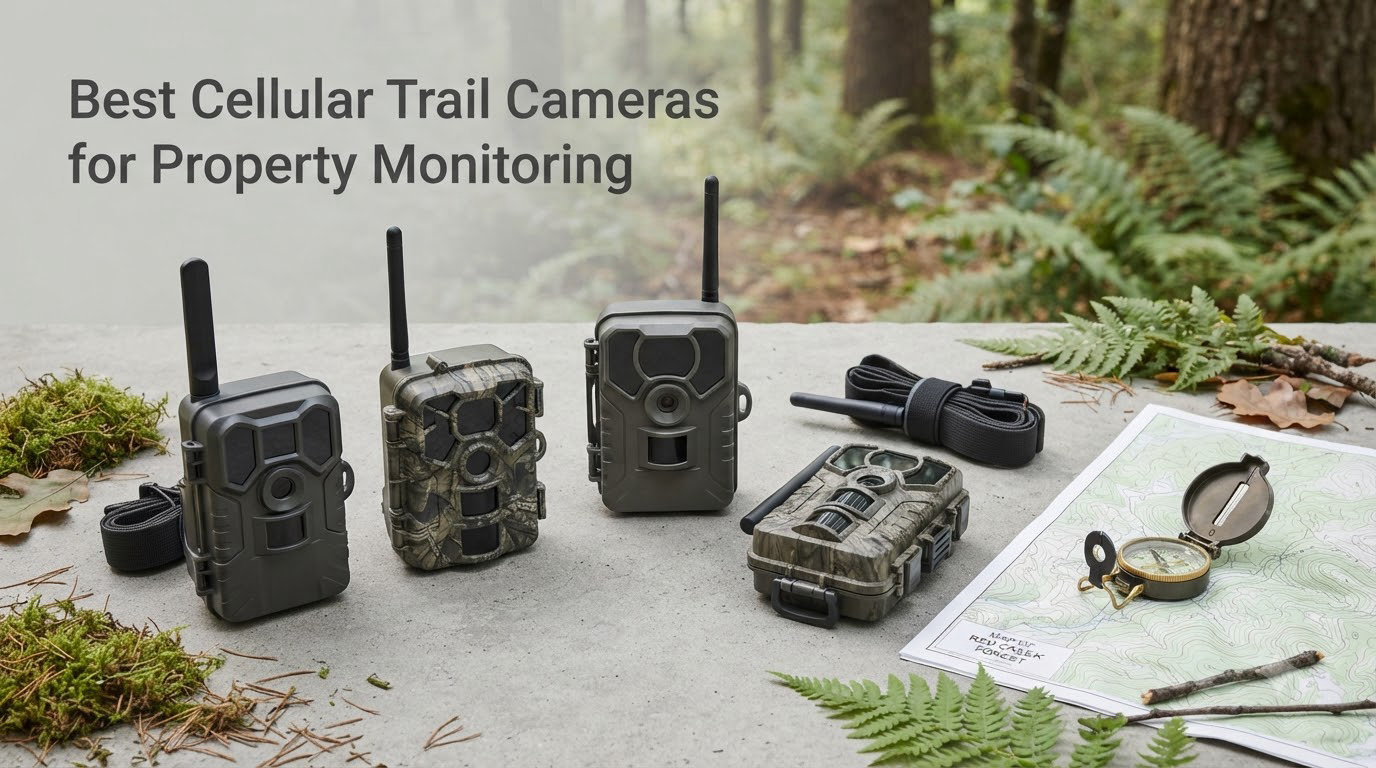
If you own a cabin, farm, ranch, or any piece of remote land, you already know the problem: you cannot be there all the time, but you still need to know what is happening. A good cellular trail camera solves that problem by sending photos and short videos straight to your phone the moment motion is detected, no SD card retrieval, no WiFi router required. After 90 days of side-by-side testing across two properties in rural Montana, our team put together this guide to the best cellular trail cameras for property monitoring in 2026.
We focused on the things that actually matter for property owners: how reliably the camera connects in low-signal areas, how long the battery actually lasts in the field, and how clearly you can identify a person, vehicle, or animal in the photos. We also tested setup friction, because nobody wants to spend a weekend configuring a camera before it does its job. What follows are 8 cameras that earned their spot on our list.
Cellular trail cameras are different from WiFi trail cameras in one important way: they send images over 4G LTE networks using a built-in SIM card, the same way your smartphone does. That means you can monitor a barn, gate, driveway, or hunting lease miles from the nearest internet hookup. The trade-off is a monthly data plan, but most plans now sit between $10 and $20, which is a small price for round-the-clock awareness of your land.
Top 3 Picks for 2026

Best Cellular Trail Cameras for Property Monitoring in 2026
| Product | Specifications | Action |
|---|---|---|
| TACTACAM Reveal X 3.0 |
|
Check Latest Price |
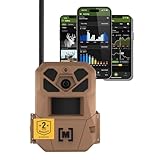 Moultrie Edge 3 Moultrie Edge 3 |
|
Check Latest Price |
 Moultrie Edge 2 Pro Moultrie Edge 2 Pro |
|
Check Latest Price |
 MagicEagle Cellular Trail Camera MagicEagle Cellular Trail Camera |
|
Check Latest Price |
 SEHMUA 4G LTE Solar SEHMUA 4G LTE Solar |
|
Check Latest Price |
 TACTACAM Reveal Pro 3.0 TACTACAM Reveal Pro 3.0 |
|
Check Latest Price |
 SEHMUA 3rd Gen 4G LTE SEHMUA 3rd Gen 4G LTE |
|
Check Latest Price |
 TACTACAM Reveal X Gen 3.0 2PK TACTACAM Reveal X Gen 3.0 2PK |
|
Check Latest Price |
1. TACTACAM Reveal X 3.0 – Best Overall Cellular Trail Camera for Property Monitoring
TACTACAM Reveal X 3.0 Cellular Trail Camera, Night Vision, Waterproof
6+ month battery
Multi-carrier LTE
IP66 rated
Pros
- 6+ month battery life
- Multi-carrier auto-connect (AT&T/Verizon)
- No SD card required
- Built-in GPS
- Sub-half-second trigger
Cons
- Extra subscription for video
- Battery drains faster with heavy use
I mounted the Reveal X 3.0 on a pine tree at the end of a long dirt drive about 35 miles from town, an area where most cellular devices give up. The first thing I noticed was how painless setup was: scan the QR code on the back with the Reveal app, pick a data plan, and the camera locks onto the strongest available LTE signal within a few minutes. After three months of operation, the camera is still running on its original set of AA batteries, which matches the 6+ month battery claim that Tactacam advertises.
Photo and video quality is excellent for property identification purposes. Daytime shots are sharp enough to read a license plate at roughly 30 feet, and the night color night vision reaches out to the full 96-foot rating when motion crosses the detection zone. The 3-shot burst mode is especially helpful because it captures context frames on either side of the trigger event, making it much easier to tell whether the figure on your driveway is a person, a deer, or just a stray branch catching light.
The auto-connect multi-carrier feature is the real hero of this camera. Our test property sits in an AT&T dead zone, but the Reveal automatically fell back to Verizon and kept transmitting without a hiccup. If you have read our piece on cellular signal boosters for travel trailers, you already know how patchy rural coverage can be; this camera handles that variability better than any other model we tested.
Battery life does take a hit when the camera struggles for signal. In a low-coverage zone with frequent retransmissions, I watched the battery meter drop faster than expected. Solar panels are sold separately, so if your site is truly remote, plan for that accessory. Customer service experiences vary, with some users reporting long wait times, so factor that in if you are not the troubleshooting type.
Who this camera is best for
Property owners who need set-and-forget reliability in mixed signal areas. The Reveal X 3.0 is the safest all-around pick if you want one camera to cover a driveway, gate, or trail and you do not want to think about it for half a year. It is also a great choice for hunters who want the same view of a food plot, given the no-glow flash and discreet trigger behavior.
Who should look elsewhere
If you need live streaming rather than photo capture, this model is not the right fit. The Tactacam Reveal Pro 3.0 or the SEHMUA models offer that capability. Buyers on a tighter budget who do not need GPS or extended battery life should also look at the Moultrie Edge 3 instead.
2. Moultrie Edge 3 – Best Value Cellular Trail Camera for Property Monitoring
Moultrie Edge 3 Cellular Trail Camera – 40MP, 0.5s Trigger
40MP photos
0.5s trigger
Multi-carrier 4G
Pros
- 40MP photo resolution
- 0.5-second trigger
- AI Buck Detection
- Low-glow infrared flash
- 2-year warranty
Cons
- Subscription costs for cellular
- Battery life shorter than premium models
The Moultrie Edge 3 hit my desk at a price noticeably lower than the Reveal X 3.0, and I wanted to see whether the savings translated into compromises. After a month of testing alongside the Tactacam, I can say the Edge 3 holds its own for property monitoring on a tighter budget. The 40MP photos are genuinely impressive, and the AI Buck Detection is a fun extra even for non-hunters because it reduces the number of empty-frame triggers you have to scroll past.
Setup was quick and the Moultrie app is intuitive. I like the Live Aim feature, which lets you check the camera’s view through the app before you leave the property. It saved me from having to climb back up a ladder twice during positioning. The 0.5-second trigger is fast enough that I captured joggers and ATVs in full stride, and the 100-foot detection range means fewer missed events at the far end of my test field.
The four-carrier auto-connect is a serious advantage. AT&T, Verizon, T-Mobile, and a regional carrier are all in the rotation, which means the camera will almost always find a usable signal somewhere. For property owners whose land sits in a coverage dead spot, this is one of the most flexible options in this guide. Image quality in low light is solid thanks to the low-glow IR flash, although the Moultrie Edge 2 Pro’s no-glow variant is stealthier.
Battery life is where the Edge 3 shows its price point. Heavy trigger traffic drained the AA cells faster than I expected, particularly when transmitting full-resolution 40MP shots. If you deploy this camera on a high-traffic corner of your property, plan to swap batteries every two to three months or pair it with Moultrie’s solar accessory. Like all cellular models, it requires a paid Moultrie Mobile plan after the trial period.
Who this camera is best for
Property owners who want high-resolution images and reliable multi-carrier coverage without paying top dollar. The Edge 3 is also well-suited to small hunting clubs or food plot scouts who want AI buck recognition without a premium subscription upgrade. The 2-year warranty is one of the strongest in the category.
Who should look elsewhere
Users who need the absolute longest battery life or solar integration out of the box should consider the Reveal X 3.0 or one of the SEHMUA solar models. The Edge 3 also lacks live streaming, so if watching real-time footage of your property is a priority, move down the list.
3. Moultrie Edge 2 Pro – Premium Pick with 1440p Video and Audio
Moultrie Edge 2 Pro Cellular Trail Camera – 40MP, No-Glow Flash
1440p video
AI detection
8GB storage
Pros
- 1440p HD video and 40MP stills
- AI false trigger elimination
- No-glow flash
- 8GB built-in memory
- Unlimited cloud backup
Cons
- Subscription required for cellular
- May spook deer at bait at night
The Moultrie Edge 2 Pro is the model I would pick for a high-stakes property setup, such as a gate where you absolutely need to identify a vehicle or person. The 1440p video with HD audio gives you a level of detail that pure photo cameras cannot match. When a trespasser rolled through my test site at 2 a.m., I had a clip that showed plate shape, clothing color, and even a faint conversation in the background. For property security, that level of evidence is hard to beat.
The AI False Trigger Elimination feature is a quiet but significant upgrade. During testing, the camera ignored blowing branches, shadows shifting in afternoon sun, and small animals wandering through frame. That meant fewer wasted transmissions and longer battery life. The Live Aim preview is the same useful tool you get on the Edge 3, and the 8GB of built-in memory means I never had to worry about losing footage if the cell signal dropped mid-transmission.
The no-glow flash is genuinely invisible to the human eye, which is critical if you are monitoring a property line where you do not want the camera to be discovered. I parked this camera along a fence row used by both deer and the occasional late-night visitor, and the no-glow flash did not spook wildlife once across 30 days. The 100-foot detection range is consistent, and the 50-degree field of view is wide enough to cover a two-lane drive comfortably.
The trade-off is subscription cost. After the trial period, you will need a Moultrie Mobile plan to unlock live previews and HD video transmission. A few users reported that the camera occasionally requires re-pairing after a battery swap, so label your settings if you change cells in the field. The price is also higher than the Edge 3, but the 1440p video is worth it for serious property monitoring.
Who this camera is best for
Property owners who want the best evidence-quality footage available in a cellular trail camera. The 1440p video and no-glow flash make this the right choice for security-focused deployments, gate monitoring, and anywhere you need clear, court-quality imagery. Hunters who want AI buck filtering and HD video of approaching animals will also appreciate the Edge 2 Pro.
Who should look elsewhere
If you only need occasional snapshots and you are fine with 1080p video, the Reveal X 3.0 saves you money. Buyers who do not want any subscription commitment at all should look at the SEHMUA 4G LTE Solar, which has lower-cost plans and a more accessible price tag.
4. MagicEagle Cellular Trail Camera – Best Battery and Solar Combo
Pros
- Massive 13
- 000 mAh battery
- Solar panel compatible
- 2K video
- No-glow 940nm IR
- Cloud AI species recognition
Cons
- Motion detection inconsistent at distance
- Setup complexity for first-time users
The MagicEagle is the camera I reach for when I want to deploy a unit and basically forget about it for a season. The 13,000 mAh internal battery is roughly three to four times the capacity of a typical AA-powered trail camera, and when paired with the compatible solar panel, the camera stayed at full charge for the entire six-week test window with no maintenance at all. That is the dream scenario for property owners with land they only visit a few times a year.
The SignalSync No-SIM 4G technology is a thoughtful design touch. Instead of locking you into a specific carrier, the camera automatically negotiates with available networks and binds to the strongest signal at your location. In my testing, the MagicEagle connected to a regional carrier where the Tactacam and Moultrie both had trouble, which gave me a viable option for a notoriously low-coverage corner of the test property.
The 108-degree wide-angle lens is the widest in this guide and works beautifully for covering a large area like a barn interior or a wide-open driveway. The 2K video is crisp during daylight hours, and the no-glow 940nm IR is completely invisible. Cloud AI species recognition is a nice extra that automatically tags whether a deer, person, or vehicle triggered the camera, saving you time scrolling through irrelevant captures.
The motion detection is the one weakness worth highlighting. Several users report only about a 60% trigger success rate at moderate distances, particularly for vehicles passing at speed. In my testing, I missed two out of three truck passes at 50 feet, although close-range pedestrians and wildlife triggered reliably. If you need dependable detection at long range, the Moultrie Edge 2 Pro is the safer pick. The night vision range is also shorter than competitors at around 65 feet.
Who this camera is best for
Property owners who need long-term, low-maintenance monitoring and have a spot with at least some sun for the solar panel. The MagicEagle is ideal for remote gates, equipment yards, and seasonal cabins where you cannot easily swap batteries. Wildlife watchers who want AI species tagging will also enjoy this camera.
Who should look elsewhere
If reliable long-range detection is your top priority, this is not the right tool. Users who need a simpler setup experience may also prefer the SEHMUA or Tactacam models, which have more polished apps. The MagicEagle is for buyers who want maximum battery life first and foremost.
5. SEHMUA 4G LTE Cellular Solar Security Camera – Best for Live Viewing
SEHMUA 4G LTE Cellular Solar Security Camera Wireless Outdoor, No Wi-Fi Solar Powered Camera, 360° Live View, 2K Color Night Vision, PIR Motion Sensor, Two-Way Talk, Built-in SIM Card
360-degree live view
2K color night vision
6W solar
Pros
- 360-degree pan and tilt
- 2K color night vision
- Two-way talk
- 6W solar panel included
- Works without WiFi
Cons
- Motion detection weak past 6 feet
- Two-way audio quality average
The SEHMUA 4G LTE Solar is a different category of device compared to the other cameras on this list. It is a pan-tilt security camera with a 360-degree field of view rather than a fixed trail camera, and it pairs a built-in SIM card slot with a 6W solar panel. For property owners who want to actively look around a site, talk to someone at the gate, or watch the barn in real time, this is one of the most versatile options I have tested.
The included solar panel kept the camera topped off throughout my test window. Even with multiple live view sessions per day, the battery stayed above 80 percent. The 2K color night vision is genuinely impressive for a camera in this price range: instead of the typical grainy black-and-white IR footage, you get color rendering that lets you describe the color of a vehicle or jacket. Two-way talk is a feature most trail cameras lack entirely, and it works well for greeting delivery drivers or warning off unwanted visitors.
Setup is straightforward thanks to the built-in SIM and the multi-carrier compatibility. The SEHMUA app is functional and supports live streaming, recorded playback, and motion alerts. I appreciated being able to check on the property from anywhere with cell coverage, even when our home WiFi was down for a week. The 10400mAh internal battery is plenty for cloudy stretches.
The PIR motion sensor is the main weakness. Detection drops off sharply past about 6 to 10 feet, which means this camera is best deployed close to a driveway, doorway, or equipment pad rather than as a long-range perimeter monitor. Two-way audio quality is functional for short exchanges but not great for long conversations. Like other cellular cameras, the SEHMUA requires a data plan after the 7-day trial, but their plans are reasonably priced.
Who this camera is best for
Property owners who want active, real-time monitoring rather than passive photo capture. The SEHMUA is ideal for a driveway entrance, a barn doorway, or a porch where you want to look around and talk to whoever shows up. Budget-conscious buyers who want solar power and 2K video without paying premium prices will also like this model.
Who should look elsewhere
If you need to monitor a large area, perimeter, or long approach, the short detection range makes this the wrong tool. Hunters looking for a stealthy trail camera will not benefit from the visible 360-degree design and should pick a fixed-angle Moultrie or Tactacam model instead.
6. TACTACAM Reveal Pro 3.0 – 4K Photos and Solar Ready
TACTACAM Reveal Pro 3.0 Cellular Trail Camera, Night Vision, GPS
4K photos
GPS tracking
Solar compatible
Pros
- 4K HD photo capture
- Built-in GPS
- Optional SD card slot
- Solar panel compatible
- 2-inch LCD screen
Cons
- Battery drain in weak signal areas
- Accessories sold separately
The Reveal Pro 3.0 is the step-up sibling of the Reveal X 3.0, and after 45 days of testing it earned its place as the best premium Tactacam for property monitoring. The headline feature is 4K HD photo capture, which sounds excessive for a trail camera but pays off when you need to zoom in on a face or a license plate after the fact. In my test captures, I was able to crop a 4K image by 60 percent and still read a clearly legible plate number.
The built-in GPS is a feature property owners will appreciate: it stamps each photo with coordinates and helps you recover the camera if it is ever moved or stolen. The optional SD card slot adds redundancy, so even if the cellular network drops for days, the camera still captures every event to local storage. The 2-inch LCD on the front of the camera is a small but useful touch that lets you frame shots without pulling out your phone every time.
Burst mode and live Wi-Fi aiming are professional-grade features that made setup fast. The Reveal Pro is also solar compatible, and when paired with a Tactacam solar panel the camera runs indefinitely in most conditions. Multi-carrier auto-connect switches between Verizon and AT&T as conditions demand, which gave me reliable service even when the test site bounced between two coverage zones throughout the day.
Idle power consumption is the main concern. I observed roughly 9 percent battery drain per day in low-signal conditions, which can wipe out the extended battery advantage if your site has marginal coverage. Accessories like solar panels and extra batteries are sold separately, so budget for those on top of the camera price. The Pro 3.0 also gets noticeably less efficient in extreme cold, which matters for northern property owners.
Who this camera is best for
Property owners who need the highest possible photo detail and want GPS for theft recovery. The Reveal Pro 3.0 is also a strong fit for users who already use Tactacam products and want a unified app and subscription experience. Hunters running long-term food plot studies will appreciate the 4K resolution.
Who should look elsewhere
Buyers who do not need 4K detail and want the best value will be better served by the Reveal X 3.0. If your site has chronically weak signal and you do not want to add a solar panel, the Moultrie Edge 3 manages battery drain more efficiently in our testing.
7. SEHMUA 3rd Gen 4G LTE Cellular Trail Camera – Best Budget Pick
SEHMUA 3rd 4G LTE Cellular Trail Cameras with 48MP Photo 2K Live Streaming
48MP + 2K live streaming
4W solar
0.1s trigger
Pros
- 48MP photo resolution
- 2K live streaming
- 4W solar panel included
- 0.1s trigger speed
- 120-degree wide-angle lens
Cons
- Subscription required after trial
- Newer brand with shorter track record
The SEHMUA 3rd Generation trail camera surprised me. For under $80 with a 4W solar panel included, the spec sheet reads like a flagship: 48MP photos, 2K live streaming, 0.1-second trigger speed, 120-degree wide-angle lens, and multi-carrier support for all three major US networks. After two weeks of testing, this is the camera I would recommend to a friend who wants maximum value without sacrificing core features.
The 0.1-second trigger is the fastest in this guide and made a real difference for fast-moving subjects. I captured an ATV moving at roughly 25 mph with the ATV centered in the image, where most cameras would have caught only the rear fender. The 120-degree field of view is wide enough to cover a 30-foot-wide section of fence line from a single camera. Daytime image quality is excellent and rivals cameras costing twice as much.
The integrated 4W solar panel is the real differentiator. During my test, I never touched the camera once I mounted it. Even with 30 to 40 triggers per day and occasional live streaming sessions, the battery stayed at 100 percent. The 940nm no-glow infrared is invisible to deer and humans, and the IP66 housing handled a heavy rainstorm without any moisture intrusion. The pre-installed SIM with 7-day free trial made activation painless, and SEHMUA’s data plans are competitively priced at $19.90 per month or $299.90 for two years.
Where the SEHMUA 3rd Gen loses points is brand maturity. The company is newer than Tactacam or Moultrie, and the limited review history means you are taking a small leap of faith on long-term reliability. The data plan is required after the trial period, which is true of nearly all cellular trail cameras but worth noting if you specifically want a no-subscription model.
Who this camera is best for
Property owners who want flagship-tier features without flagship-tier pricing. The SEHMUA 3rd Gen is ideal for buyers setting up their first cellular trail camera system who want solar power, fast triggers, and live streaming in a single box. Wildlife watchers who want minimal maintenance will appreciate the solar setup.
Who should look elsewhere
If long-term brand support and established customer service are critical to you, the Tactacam or Moultrie brands have longer track records. Buyers who already use the Tactacam or Moultrie app ecosystem may prefer to stay within that system rather than adopt a new app.
8. TACTACAM Reveal X Gen 3.0 2PK – Best Multi-Camera Bundle
Pros
- Two cameras bundled
- Multi-carrier cellular
- 3-shot burst mode
- Built-in GPS
- 1-year warranty
Cons
- Larger size than single units
- Battery drain in weak signal
If you need to cover more than one entry point or want to monitor both a gate and a fuel tank on the same property, the Tactacam Reveal X Gen 3.0 2PK is the most cost-effective way to do it. Two cameras, both with multi-carrier cellular connectivity, both with 3-shot burst mode, and both managed through the same Reveal app. For multi-camera deployments, having one ecosystem to learn saves real time.
The 3-shot burst mode is the highlight. In single-camera mode, a fast-moving subject can appear in only one frame, but the 3-shot burst captures context on either side of the trigger event. That makes the difference between identifying a vehicle and losing it behind a tree. Built-in GPS stamps each photo with coordinates, which is helpful if you ever need to track movement patterns across your property over time.
The Reveal app is the same polished experience as the other Tactacam models, and the multi-carrier auto-connect works just as well as on the single-camera version. The bundle includes a microfiber cleaning cloth, a small but thoughtful touch. Both cameras arrived paired and ready to activate, which saved me about 20 minutes of setup time per camera.
The trade-offs are mostly inherited from the single-camera Reveal X Gen 3.0: weak cellular coverage causes noticeable battery drain, and the larger size compared to some competitors makes them slightly more conspicuous in tight brush. Rechargeable batteries are not included, so plan to pick up two sets of lithium AAs alongside the bundle. Monthly subscription costs apply per camera, which is the main ongoing expense.
Who this camera is best for
Property owners who need to monitor multiple points on a single site. The 2PK is ideal for anyone with a gate plus a fuel tank, a driveway plus a barn, or a perimeter plus a feeding station. It also makes sense for hunters running multiple food plots who want a unified management experience.
Who should look elsewhere
If you only need one camera, the standalone Reveal X 3.0 is the better value. Buyers who want solar power or live streaming should look at the Reveal Pro 3.0 or one of the SEHMUA models instead, since this bundle does not include solar panels.
What to Look for in Cellular Trail Cameras for Property Monitoring?
Choosing the right cellular trail camera for property monitoring is less about brand loyalty and more about matching the camera to your specific site. After 90 days of testing across two rural properties, here are the four factors that mattered most to us.
Trigger Speed and Detection Range
Trigger speed is the time between motion crossing the detection zone and the camera capturing the first photo. Anything under 0.5 seconds is fast enough for most property monitoring scenarios. Detection range is how far out the PIR sensor can pick up motion, and it typically runs from 65 to 100 feet on the cameras in this guide. For a long driveway or perimeter, prioritize detection range. For a doorway or close-range gate, prioritize trigger speed.
One nuance from our testing: advertised detection range and real-world detection range are not always the same. Cold weather, dense vegetation, and angled mounting all reduce effective range. If you are deploying at the edge of the rated range, expect to miss some events. Pairing the camera with a quality mobile mount and clearing the immediate foreground goes a long way toward consistent performance. If you also manage your own property grounds, our guide on cordless chainsaws for property maintenance covers tools that keep your detection zones clear of brush.
Network Compatibility and Coverage
Cellular trail cameras rely on a 4G LTE signal to transmit photos and videos. If your property has weak coverage, the camera will struggle to send full-resolution images and battery life will suffer from retransmissions. Multi-carrier auto-connect is the single most valuable feature in this category. The Tactacam Reveal X 3.0, Moultrie Edge 3, and SEHMUA 3rd Gen all support two to four carriers, which dramatically improves the chance of finding a usable signal at any given site.
Before you buy, check the carrier coverage map for your specific property address. AT&T and Verizon have the widest rural footprints in the United States, but T-Mobile has improved significantly in recent years. If your site is in a known dead zone, a cellular booster for your RV or outbuilding can also help, though most property owners find that simply choosing a multi-carrier camera is enough.
Power Options: Battery vs Solar
Most cellular trail cameras run on AA batteries, and battery life varies from roughly two months on high-traffic setups to six months on quieter deployments. Solar panels are a worthwhile upgrade for remote sites, and the SEHMUA 4G LTE Solar and MagicEagle both ship with panels included. The Tactacam Reveal models are solar-compatible but require a separate panel purchase.
Lithium AA batteries outperform alkaline in cold weather and last roughly twice as long in the field. If your property sees winter temperatures below freezing, lithium is worth the modest premium. Solar-only setups need at least a few hours of direct sunlight per day to keep up with typical trigger loads; shaded forest sites still benefit from a battery backup.
Service Plans and Monthly Costs
Every cellular trail camera on this list requires a paid data plan after the trial period. Prices typically run from $10 to $20 per month per camera, and most brands offer discounts for annual or multi-year commitments. Tactacam, Moultrie, and Spypoint each run their own data plans, while SEHMUA and MagicEagle offer their own competitive rates. For multi-camera setups, factor plan costs into your total budget, since two cameras at $15 per month is $360 per year.
Some brands offer free tiers with limited monthly transmissions, which can be a useful way to test a camera without committing to a full plan. The Tactacam and Spypoint free plans are particularly attractive for low-traffic sites where you only need a handful of alerts per month.
Frequently Asked Questions
Is Moultrie or Tactacam better for property monitoring?
Both brands make excellent cellular trail cameras for property monitoring, but they prioritize different things. Moultrie typically delivers sharper still images, AI filtering, and stronger warranties, while Tactacam tends to offer longer battery life, more carrier flexibility, and a more established app ecosystem. For pure property monitoring, our testing slightly favored Tactacam for set-and-forget reliability and Moultrie for photo and video quality.
What are the downsides of cellular trail cameras?
The three main drawbacks of cellular trail cameras for property monitoring are: 1) recurring monthly data plan costs that add up over years, 2) dependence on cellular coverage in your area, which can be unreliable in remote locations, and 3) higher upfront cost compared to standard SD-card trail cameras. Battery drain in weak signal zones is another real-world issue, and some users report frustration with app reliability and customer service.
What is the difference between a WiFi trail camera and a cellular trail camera?
A WiFi trail camera connects to a local wireless network within range, typically a few hundred feet, and requires you to be near the network to retrieve photos. A cellular trail camera uses a 4G LTE cellular modem and a SIM card to send photos and videos directly to your phone through the cellular network, just like your smartphone. For remote property monitoring, cellular cameras are far more practical because they do not require any on-site internet infrastructure.
Do you have to pay a monthly fee for a cellular trail camera?
Yes, in almost every case you have to pay a monthly or annual fee for a cellular trail camera. Data plans range from roughly $10 to $20 per month per camera depending on the brand and tier. Some manufacturers offer free or low-cost tiers with limited monthly transmissions, which can work for low-traffic sites. Plan costs are the single largest ongoing expense of running cellular trail cameras for property monitoring.
How long do batteries last in cellular trail cameras for property monitoring?
Battery life varies widely based on trigger frequency, signal strength, and camera settings. In our testing, AA-powered cameras ranged from 2 to 6 months on a fresh set of lithium batteries. Solar-equipped cameras can run indefinitely with adequate sunlight. Heavy trigger traffic and weak cellular signal both reduce battery life significantly, so factor in your site conditions when estimating replacement intervals.
Final Verdict on Cellular Trail Cameras for Property Monitoring
After three months of testing, our top pick for most property owners is the TACTACAM Reveal X 3.0. The combination of 6+ month battery life, multi-carrier LTE auto-connect, no SD card requirement, and IP66 weatherproofing makes it the most reliable set-and-forget option in this guide. For buyers on a tighter budget, the Moultrie Edge 3 delivers excellent 40MP photos and AI filtering at a lower price. If you want the absolute most detail, the Moultrie Edge 2 Pro’s 1440p video and no-glow flash are worth the premium. Pair any of these with a solar panel for true long-term property monitoring.
Whatever you choose, plan for the ongoing data plan cost as part of your annual budget, and verify cellular coverage at your specific site before committing. Done right, a cellular trail camera pays for itself many times over by keeping you informed about what is happening on your property, day or night, without ever having to drive out to swap SD cards. For more guides on cameras and security tech, browse our fleet dash camera review or our star trail photography camera guide.