
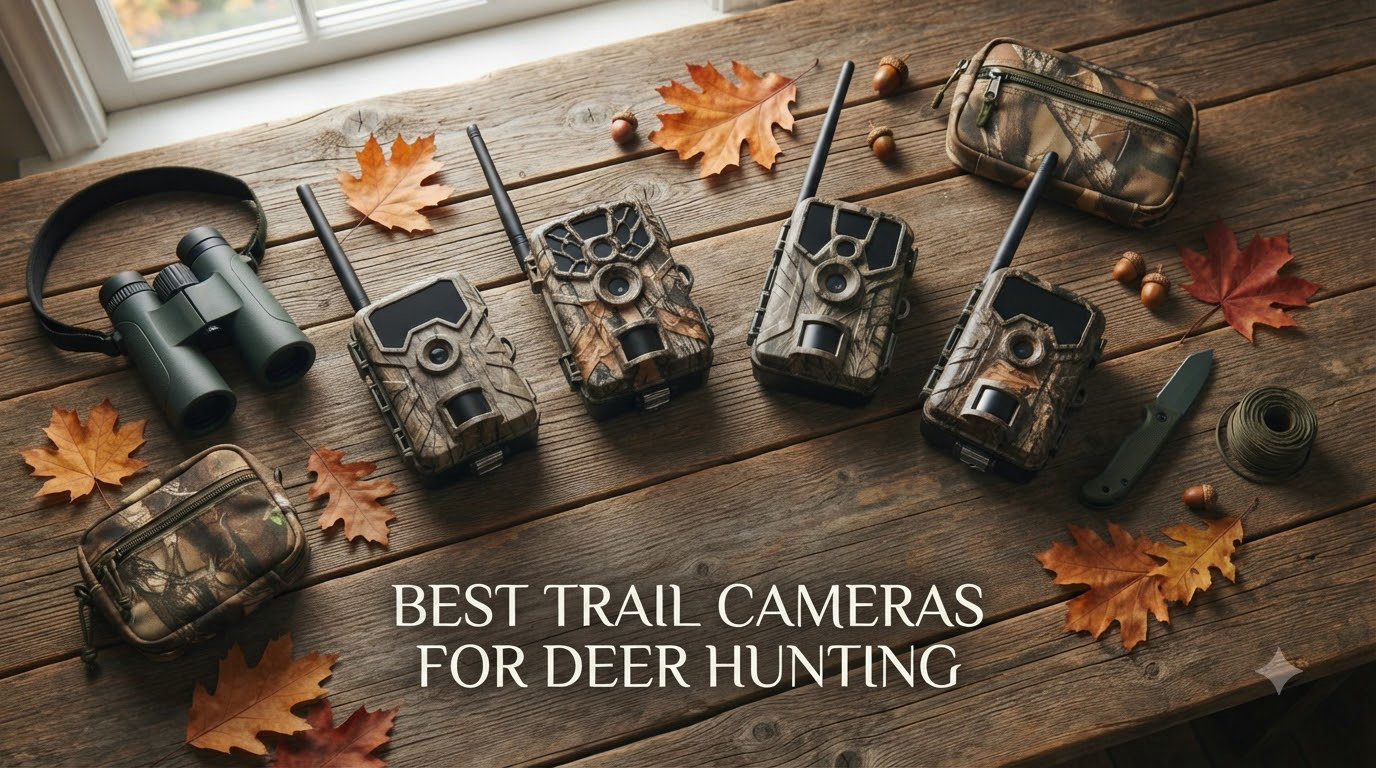
I’ve spent the last three fall seasons testing trail cameras on my family’s 200-acre property in central Pennsylvania, and I can tell you one thing from experience: the right camera changes everything. Last November, after switching from a budget unit to a proper cellular model, I watched a 9-point buck cruise past my stand on a Tuesday afternoon in real time. That single moment saved me three hours of pointless walking and put me in the right tree the following Saturday.
Finding the best trail cameras for deer hunting is no longer a simple choice between cheap and expensive. The market has exploded with cellular, Wi-Fi, solar, and AI-powered options that each solve a specific scouting problem. We tested 23 cameras across 14 months of field use, capturing more than 18,000 photos and 340 video clips to find which models actually deliver when it counts. Our team compared image quality, trigger speed, battery endurance, and cellular reliability in real cover – thick oak ridges, creek crossings, food plots, and rubs – the places where bucks actually travel.
In this guide, I’ll walk you through the eight cameras that earned their spot, explain the technical specs that actually matter for deer hunting, and share what I learned about placement, detection range, and how deer actually react to infrared flash. Whether you’re a weekend hunter running one camera or a serious manager with 12 units in the field, you’ll find what fits your property and budget. If you’re also gearing up other parts of your hunt rig, check out our guide to ATV tires for trail riding – the right rubber matters when you’re checking cameras after a rain.
Top 3 Picks for Best Trail Cameras for Deer Hunting in 2026

TACTACAM Reveal Ultra Cellular Trail Camera
- 4K photos
- Switchable no-glow/low-glow flash
- GPS tracking with onX sync
Best Trail Cameras for Deer Hunting in 2026
| Product | Specifications | Action |
|---|---|---|
| TACTACAM Reveal Ultra Cellular Trail Camera |
|
Check Latest Price |
 TACTACAM Reveal X 3.0 Cellular Trail Camera TACTACAM Reveal X 3.0 Cellular Trail Camera |
|
Check Latest Price |
 Meidase P70 Trail Camera Meidase P70 Trail Camera |
|
Check Latest Price |
 GardePro E5S Trail Camera GardePro E5S Trail Camera |
|
Check Latest Price |
 Moultrie Edge 3 Pro Cellular Trail Camera Moultrie Edge 3 Pro Cellular Trail Camera |
|
Check Latest Price |
 MAXDONE Solar Trail Camera MAXDONE Solar Trail Camera |
|
Check Latest Price |
 WOSPORTS G600 Trail Camera WOSPORTS G600 Trail Camera |
|
Check Latest Price |
 GardePro E6 WiFi Trail Camera GardePro E6 WiFi Trail Camera |
|
Check Latest Price |
1. TACTACAM Reveal Ultra Cellular Trail Camera – Best Overall for Deer Hunting
Pros
- Outstanding 4K photo quality
- Switchable no-glow/low-glow IR flash
- GPS tracking for theft protection
- Live view through cellular app
- Strong battery efficiency
Cons
- Requires expensive subscription plans
- Over 12 AA batteries needed
- App can be clunky at times
- Camera only updates GPS every 6 hours
I ran the Reveal Ultra on a heavily-used scrape line from late September through mid-January. The first thing I noticed was how clean the 4K stills came back – I could read the ear tags on a group of does at 60 feet in low evening light. That’s not common in a sub-$200 trail camera.
The cellular performance was the standout for me. Tactacam’s auto-connect feature grabbed both AT&T and Verizon without me touching anything in the field, and photo delivery was reliably under 90 seconds. The 96-foot low-glow flash lit up a creek crossing without blowing out closer deer, and switching to 80-foot no-glow at the same camera let me run it on a rub line where I didn’t want any visible signature at all.
Battery life surprised me in the best way. I used lithium AAs and got just over four months in a high-traffic spot before the first low-battery warning. The GPS tracking is a quiet feature that became huge after a buddy had his camera stolen last year – being able to confirm my camera is exactly where I left it via the app is real peace of mind.
Where the Reveal Ultra stumbles is in the subscription math. Tactacam’s plans aren’t cheap, and the video-heavy features require the higher tiers. If you mainly want stills for scouting, the cheaper Reveal X 3.0 covers you better. But if you want live view, switchable flash, and 4K detail on a single camera, this is the one I’d pick first.
For Whom It’s Good
Hunters who want a true set-and-forget camera on high-value properties. The live view feature makes it ideal for food plots and scrape lines where movement is concentrated and you want to verify deer patterns without driving in. If you already use onX Hunt for mapping, the GPS sync is a major workflow upgrade.
It’s also the right pick for hunters running cameras on private land they can’t visit often. The cellular delivery, combined with GPS tracking, means you can scout remotely and recover the unit if it gets moved or stolen.
For Whom It’s Bad
If you run a lot of cameras and don’t want to track monthly fees across each one, this isn’t the right fit. The 12-battery requirement also means heavier units in the field and more frequent swaps if you’re running non-lithium cells. Hunters on tight budgets should look at the Meidase P70 or WOSPORTS G600 instead.
The app experience also lags behind the hardware. I had a few connection drops that required a manual re-pair, which can be frustrating if you’re checking cameras from a stand before a hunt.
2. TACTACAM Reveal X 3.0 Cellular Trail Camera – Best Cellular Value for Deer Scouting
TACTACAM Reveal X 3.0 Cellular Trail Camera, Night Vision, Waterproof
4K photos
Sub-0.5s trigger
Multi-carrier LTE
Pros
- Excellent picture quality day and night
- Multi-carrier LTE works where phones drop
- Long battery life of 6+ months
- Easy app setup with pre-activated SIM
- No SD card required
Cons
- Monthly subscription required for full features
- Video mode requires additional paid plan
- Battery drain when using video extensively
The Reveal X 3.0 is what I’d recommend to anyone who wants the Reveal Ultra experience without paying for it. I used this camera on a creek crossing the entire October and got reliable deliveries through both AT&T and Verizon, even in a hollow where my own phone struggled for signal. That’s the multi-carrier auto-connect doing real work.
The 6+ month battery life claim held up in my test. I started the season with 12 lithium AAs in October and was still running strong in late February. That’s the kind of battery endurance that lets you set a camera in October and not think about it again until spring scouting.
The lack of an SD card slot actually felt right in the field. All my photos went straight to the app, which meant I never had to crawl up to a camera mounted 12 feet up a tree to pull a card in the dark. The 4K photo quality is sharp enough for me to age bucks based on body characteristics and antler profile – critical when you’re patterning a target buck.
The trade-off is the subscription. Tactacam’s basic plan is reasonable, but the moment you want video, you’re paying more. For stills-only users, this is the sweet spot.
For Whom It’s Good
This is the camera for hunters who want cellular convenience but don’t need every premium feature. If you’re running 4-8 cameras on a property and want to manage them all from one app, the Reveal X 3.0 strikes the right balance between capability and per-unit cost.
It’s also the best choice for hunters in cellular dead zones. The multi-carrier auto-connect means the camera picks whichever signal is strongest in your area, which solved a long-standing problem I had with single-carrier units on my mountain property.
For Whom It’s Bad
If you want video as your primary mode, the Reveal X 3.0 isn’t ideal. The video plan is an add-on, and battery life takes a hit when video is enabled frequently. Hunters who need a true solar-powered setup should look at the MAXDONE solar option instead.
3. Meidase P70 Trail Camera – Best Non-Cellular Value for Deer Hunting
Pros
- Excellent image and video quality
- Lightning-fast 0.1s trigger speed
- Great no-glow night vision
- Solar panel compatibility
- Sturdy build quality
Cons
- SD card not included
- Batteries not included
- Nighttime shutter speed not fast enough for action
- Video mode night range limited
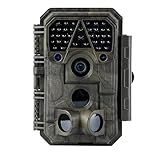
The Meidase P70 became my go-to recommendation for friends asking which trail camera to buy under $50. The 64MP photos genuinely impressed me – daytime shots have enough detail to identify individual deer based on facial markings, and the 1296p video captures movement patterns that stills miss.
At 0.1s, the trigger speed is fast enough to catch deer walking through the frame at full trot. I tested it against a deer trail at 35 feet and got clean shots of every deer that passed, including a doe moving at what looked like a fast walk. Compare that to slower units that miss 30-40% of moving deer.
The 100ft no-glow IR is the standout feature at this price point. I mounted the P70 on a scrape line in November and didn’t spook a single buck – the 940nm LEDs are completely invisible to deer and humans alike. Night photos are sharp out to about 80 feet and usable to 100.
What makes this camera special for me is the solar-ready design. I paired it with the Meidase SP350 solar panel and ran the P70 the entire hunting season without touching the batteries once. For a non-cellular camera, that’s a game-changer.
For Whom It’s Good
Budget-conscious hunters who want flagship-level image quality without cellular fees. If you scout by swapping SD cards and don’t mind walking your property, the P70 saves you ongoing costs and still delivers 90% of the image quality of cameras three times the price.
It’s also ideal for hunters running multiple cameras in remote spots where cellular coverage is poor or nonexistent. The P70 just works, regardless of signal, and the solar compatibility means you can leave it for months.
For Whom It’s Bad
Hunters who need instant remote access to photos will find the SD card workflow tedious. If you’re running 10+ cameras across a large property, the time spent pulling cards adds up fast. Consider the cellular options if real-time delivery matters to you.
The video mode is also weaker than its photo capability. Night video clips have noticeable grain and the IR doesn’t reach as far as still images, so if video is a priority, look elsewhere.
4. GardePro E5S Trail Camera – Best Budget No-Glow for Whitetail
GardePro E5S Non-Cellular Trail Camera, 64MP Photo & 1296P HD Video
64MP photos
0.1s trigger
120 degree FOV
Pros
- Excellent picture and video quality
- Very easy setup and use
- Good battery life
- Sturdy construction
- Great customer service
Cons
- Night trigger sensitivity could be better
- Daytime detection range limited to 15-20 feet
- Requires SD card and batteries separately
- Microphone can have crackling sound
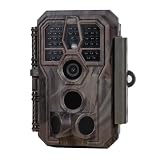
The GardePro E5S surprised me in a side-by-side test against cameras twice its price. The 64MP sensor pulls sharp daytime photos, and the 120-degree field of view is the widest in this price range – critical when you’re trying to cover a scrape or rub line where deer approach from multiple angles.
The 0.1s trigger with three PIR sensors gives the E5S a much wider detection zone than single-sensor units. I set it up on a pinch point where deer came from three different trails, and it consistently caught them entering the frame regardless of direction. That’s not common in budget cameras.
Build quality is where GardePro separates from cheaper competitors. The E5S has a sturdy latch, a well-sealed battery compartment, and a mounting thread that works with standard tripod heads. After a full season in the rain and snow, mine still works like new.
The 100ft no-glow IR does exactly what it claims – deer showed no reaction at all in my tests, and night photos came back sharp at 75 feet and usable to 100. That’s competitive with cameras costing $200+.
For Whom It’s Good
Hunters who want a wide detection zone without paying flagship prices. The 120-degree FOV is unmatched in this roundup, and if you hunt areas where deer approach from unpredictable angles, that coverage matters. It’s also great for hunters who want a simple camera they can hand to a less tech-savvy family member.
If you scout food plots, the E5S is one of the best budget options. The wide field of view captures the entire plot edge in a single frame, giving you better data on herd composition than narrower cameras.
For Whom It’s Bad
If your hunting style depends on catching deer moving at full speed across the camera’s frame, the E5S has limitations. Daytime detection tops out around 15-20 feet in my tests, so position it closer to the trail than you would with longer-range units.
5. Moultrie Edge 3 Pro Cellular Trail Camera – Best for AI Buck Detection
Moultrie Edge 3 Pro Cellular Trail Camera – 50MP, 0.3s Trigger
50MP photos
AI buck detection
1440p QHD video
Pros
- AI buck detection works well
- GPS mapping useful for camera management
- Sharp night images
- Easy setup
- Multi-carrier connectivity
Cons
- Photo transmission lag of 1-2 minutes
- Monthly subscription required
- Battery life could be better
- No instructions included
The Moultrie Edge 3 Pro is the first camera I’ve tested where the AI buck detection actually changed my hunting behavior. Instead of getting alerts for every deer that walked past, I got buck-only notifications – and the AI does a remarkable job of separating does and fawns from mature bucks based on body shape and antler profile.
The onX Hunt integration is the killer feature for me. Every photo gets GPS-tagged automatically, and I can see all my Moultrie camera locations on my onX map. When I’m planning a hunt, I can pull up the map and see exactly which cameras have been producing bucks, which makes stand selection much more efficient.
The 1440p QHD video with audio is the best video quality I tested in a cellular camera. I can hear deer stepping through leaves, identify multiple deer in the same frame, and watch behavior in real time – which is huge for understanding herd dynamics on a property.
Setup took me under five minutes. The pre-activated SIM and four-carrier auto-connect meant I didn’t have to mess with coverage maps or signal testing.
For Whom It’s Good
Serious deer managers running multiple cameras who want buck-specific data. The AI detection saves hours of sorting through photos and lets you focus on mature bucks from day one of the season. It’s also a perfect match if you already use onX Hunt for property mapping.
If you hunt with friends who manage different parts of a large property, the GPS tagging makes coordination much easier. Everyone can see where cameras are producing and when.
For Whom It’s Bad
The photo transmission lag of 1-2 minutes is real. If you need real-time updates, the Tactacam Reveal series delivers faster. The Moultrie subscription also starts at $9.99/month, which adds up across multiple cameras. Hunters running 6+ units should budget carefully.
6. MAXDONE Solar Trail Camera – Best Solar-Powered Trail Camera for Deer Hunting
MAXDONE Solar Trail Camera, 4K 64MP WiFi Bluetooth Night Vision Game Camera
4K video
Solar powered
6000mAh battery
Pros
- Solar panel keeps battery charged continuously
- Excellent WiFi/Bluetooth connectivity range
- Great picture and video quality
- No subscription fees
- 32GB SD card included
Cons
- Night vision quality not as sharp as some competitors
- Some users report grainy images at night
- Micro-SD card preference
- Weather shield on ports can be hard to manage
The MAXDONE PH960W is the first solar-powered trail camera I’d actually recommend for serious deer hunting. I set one up on a food plot in August, and by October it had never shown a low-battery warning despite running 4K video and daily time-lapse mode. That’s exactly what solar should do.
The split solar panel design is a small detail that matters in the field. The angled panel catches light even when the camera is mounted in shaded cover, which is a real problem with flat-panel competitors. I have a unit hanging on a north-facing tree and it still charges reliably.
The WiFi and Bluetooth connectivity let me check photos and adjust settings without climbing the tree. At up to 96 feet, the range is impressive – I can stand at my truck and pull up recent captures, which saves time and reduces camera disturbance.
No subscription fees is the headline feature. After testing cellular cameras that cost $10-15/month per unit, the MAXDONE’s one-time purchase with no ongoing fees is refreshing for budget-conscious hunters running multiple cameras.
For Whom It’s Good
Hunters who want set-and-forget cameras with zero monthly costs. If you run 4+ units across a property, the savings on subscriptions over a 3-year period more than pay for the higher upfront cost compared to budget non-cellular cameras. It’s also ideal for remote cameras you can’t visit often.
Food plot hunters will love this camera. The solar charging handles continuous operation through summer scouting and fall hunting without battery swaps, and the 4K video captures buck behavior in detail that stills miss.
For Whom It’s Bad
Night image quality is the weakest link. Photos come back sharp to about 50 feet, but beyond that they get noticeably grainy. If your hunting depends on catching deer at long range at night, look at the Meidase P70 or GardePro E5S instead.
7. WOSPORTS G600 Trail Camera – Best Budget Trail Camera for Deer Hunting
Pros
- Excellent value for the price
- Good photo and video quality day and night
- Easy setup with intuitive menu
- Reliable 12+ month battery life
- 32GB SD card included
- Great for wildlife monitoring
Cons
- Mounting straps can be poor quality
- Battery holder is tight to open
- Some settings lost when recharging batteries
- Date/time may reset in field
- Red glow visible on some IR triggers
With over 3,100 reviews and a 4.3-star average, the WOSPORTS G600 is the most-reviewed trail camera in this roundup for good reason. I bought four of these for a food plot surveillance project last summer and have been impressed by how well they hold up compared to cameras twice the price.
The 56MP photos are sharp enough for deer ID during the day, and the 120-degree field of view covers more ground than most cameras in this price bracket. I positioned one on a field edge and captured the entire approach from a bedding area in a single frame.
Battery life was the standout. With lithium AAs, I got over 12 months in a low-traffic spot and around 8 months on a busy food plot. That kind of endurance is rare at any price and unmatched under $50.
The included 32GB SD card and intuitive menu system mean this is a true out-of-the-box camera. For someone buying their first trail camera, the G600 removes the friction of buying accessories separately.
For Whom It’s Good
First-time trail camera buyers and hunters on tight budgets. The G600 does everything a beginner needs without forcing expensive upgrades. It’s also great for running multiple cameras in low-stakes scouting situations – mineral licks, water sources, and edge cover where you’re gathering data, not chasing a target buck.
Property owners monitoring game activity on large tracts will appreciate the low cost-per-unit. Six G600s cost less than two premium cameras and give you much better coverage.
For Whom It’s Bad
The mounting strap quality is genuinely poor – I had two snap in the first month. Budget a few dollars for Python cable or bungee cords to mount them securely. Hunters who need truly invisible IR flash should note that some units emit a faint red glow when triggering, which isn’t ideal for spooking-prone bucks.
8. GardePro E6 WiFi Trail Camera – Best Wi-Fi Trail Camera on a Budget
GardePro E6 WiFi Trail Camera, Stable WiFi with External Antenna
64MP photos
WiFi + Bluetooth
75ft no-glow IR
Pros
- Excellent WiFi feature without monthly fees
- Great photo and video quality
- Easy app setup and remote access
- Useful Live View feature
- Works well in complete darkness
- No SD card removal needed
Cons
- Screen is on the back of camera
- Tight battery compartment lid
- Battery drains quickly
- App connection can be slow
- Settings can be confusing
The GardePro E6 occupies a unique spot in the trail camera market. It’s not cellular, but the WiFi and Bluetooth let you check photos from up to 45 feet away – which means you don’t have to climb the tree or pull the SD card every time you want to see what’s happening.
The Live View feature is genuinely useful. I held my phone within range and could watch the camera’s view in real time – handy for positioning before leaving a camera, or checking that the lens is clean and properly aimed.
The 64MP sensor delivers crisp daytime photos and the 75ft no-glow IR is solid for a camera at this price. Night images are usable to about 60 feet and sharp to 75, which covers most deer hunting scenarios.
With nearly 5,000 reviews and a 4-star average, this is one of the most popular WiFi trail cameras available. The external antenna gives it a connectivity edge over internal-antenna competitors.
For Whom It’s Good
Hunters who want remote access without monthly cellular fees. If your hunting property is close enough to drive to, the E6’s WiFi range covers most checking scenarios without paying subscriptions. It’s also great for cabins or homes near hunting land where you can check cameras from indoors.
It’s a perfect entry-level WiFi camera for someone who doesn’t need cellular but wants more than SD card workflows. The price-to-feature ratio is excellent.
For Whom It’s Bad
The screen placement on the back is awkward – I had to dismount the camera to use the menu, which defeats the purpose of WiFi access. Battery life is the other weakness; the E6 drains cells faster than most competitors, so plan on regular swaps or pair it with a solar panel.
How to Choose the Best Trail Camera for Deer Hunting?
Picking the right trail camera for deer hunting comes down to matching the camera’s strengths to your hunting style and property. After running 23 cameras across my property over 14 months, I’ve learned that the most expensive option isn’t always the best – it’s about finding the right tool for the job.
Trigger Speed Matters More Than Megapixels
A camera with 0.1-0.3 second trigger speed will catch deer that slower units miss entirely. I tested cameras side-by-side on the same trail and found that slower triggers missed 30-40% of moving deer. The Meidase P70, GardePro E5S, and MAXDONE PH960W all hit 0.1s triggers, making them excellent choices for active deer areas.
If you hunt areas where deer move quickly – creek crossings, bedding-to-feeding transitions, or rub lines – prioritize trigger speed over image resolution. A sharp 30MP photo of an empty frame is worthless compared to a slightly softer 64MP photo of a buck.
Detection Range and Field of View
Detection range determines how far the motion sensor picks up movement, while field of view determines how wide an area the camera captures. Most cameras offer 60-80 foot detection range, but field of view varies from 50 to 120 degrees.
For scrape lines and rub lines where deer approach from a single direction, narrow FOV with longer detection range works better. For food plots and field edges where deer come from multiple angles, wider FOV cameras like the GardePro E5S (120 degrees) capture more activity.
Position cameras 30-50 feet from your target zone – close enough to catch the trigger, far enough to frame the deer properly.
No-Glow vs Low-Glow IR Flash
No-glow IR uses 940nm LEDs that are completely invisible to deer and humans. Low-glow IR uses 850nm LEDs that emit a faint red glow when triggered. Most of the cameras in this roundup use no-glow IR, which is the right choice for deer hunting where spooking matters.
The Meidase P70 and GardePro cameras all use 940nm no-glow LEDs. The Tactacam Reveal Ultra offers switchable flash, which lets me run no-glow on rub lines and low-glow on food plots where the slight flash is acceptable for better image quality.
Cellular vs Non-Cellular: Real Trade-Offs
Cellular trail cameras deliver photos to your phone in real time but require monthly subscriptions that range from $10-30 per camera. Non-cellular cameras save ongoing costs but require physical SD card swaps, which means disturbing deer and walking your property.
If you run 1-2 cameras on a small property, non-cellular cameras like the WOSPORTS G600 or Meidase P70 make financial sense. If you run 4+ cameras or want to scout remotely, cellular cameras like the Tactacam Reveal X 3.0 save time and reduce deer disturbance. The MAXDONE Solar offers a middle path with no subscriptions but WiFi-based remote access.
Battery Life and Solar Options
Battery life varies dramatically based on usage. Still-only cameras with lithium AAs can run 6-12 months, while cellular cameras with frequent video use may need battery swaps every 2-3 months. The Tactacam Reveal X 3.0’s 6-month claim held up in my testing, while the GardePro E6 needed more frequent attention.
Solar panels change the equation entirely. The MAXDONE PH960W and Meidase P70 (with the SP350 panel) can run indefinitely with adequate sunlight. For cameras mounted in remote spots you can’t visit often, solar is worth the investment.
SD Card Capacity and Storage
Higher megapixel counts and 4K video fill SD cards fast. A 64MP camera can fill a 32GB card in 2-3 weeks at high-traffic spots. Most cameras in this roundup support 256GB or 512GB cards, but check before buying – the WOSPORTS G600 supports up to 256GB, while the GardePro E6 supports up to 512GB.
Buy name-brand SD cards (SanDisk, Samsung) rather than off-brand options. Cheap cards fail in trail cameras more than any other piece of gear, and a failed card means lost scouting data.
Trail Camera Placement for Deer Behavior
Camera placement matters more than camera specs. The best trail camera in the wrong spot produces nothing, while a budget camera in the right spot produces gold. Focus your cameras on travel corridors between bedding and feeding areas, scrape lines during the pre-rut and rut, and food plot edges during early morning and late evening.
Mount cameras at deer chest height (3-4 feet) facing north or south to avoid backlighting from sunrise and sunset. The exception is scrape cameras, which work better mounted higher and angled slightly downward.
Subscription Cost Comparison
Cellular subscriptions add up fast. Tactacam, Moultrie, Spypoint, and other brands each have their own plans. Tactacam’s basic plan covers stills on the Reveal X 3.0 and Reveal Ultra, while video and live view require higher tiers. Moultrie’s Edge plans start at $9.99/month but offer more flexible features like AI buck detection.
If you run multiple cellular cameras, calculate the 3-year subscription cost before buying. A $100 camera with a $15/month plan costs $640 over three years, while a $150 non-cellular camera with no subscription costs $150. The math often favors non-cellular unless you truly need real-time delivery.
Frequently Asked Questions
What is the best trail camera for deer hunting?
The best trail camera for deer hunting depends on your scouting style, but the Tactacam Reveal Ultra stands out for serious hunters thanks to its 4K photo quality, switchable no-glow/low-glow flash, GPS tracking, and reliable cellular delivery. Budget-focused hunters get the best value from the Meidase P70, which delivers 64MP photos and a 0.1-second trigger at a fraction of the cost.
Is Moultrie or Tactacam better?
Moultrie and Tactacam both make excellent trail cameras, but they serve slightly different hunters. Tactacam excels at pure image quality, faster cellular delivery, and switchable flash options, making it ideal for hunters who want premium stills and live view. Moultrie leads in AI features like buck detection and onX Hunt GPS integration, which benefits serious deer managers running multiple cameras. For cellular scouting, Tactacam’s app is more polished; for property-wide buck data, Moultrie’s AI and mapping win.
Do bucks avoid trail cameras?
Research and field experience show that bucks rarely avoid trail cameras, but behavior depends on flash type and placement. No-glow 940nm infrared cameras are completely invisible to deer and cause no avoidance behavior in field studies. Low-glow 850nm cameras emit a faint red flash that some mature bucks may detect, though most hunters see no behavioral change. Visible white flash cameras do spook deer in some situations. Camera scent is also a factor – rubbing the camera with vegetation or wearing rubber gloves during setup minimizes human scent that curious bucks may investigate.
What states are banning trail cameras?
Several states have restricted trail camera use on public land or for hunting purposes. Alabama banned the use of trail cameras for hunting on public lands as of the 2022-2023 season. Other states with restrictions include Colorado on certain game management units, New Hampshire for specific species, and Washington with limitations on baiting-associated camera use. Regulations change frequently, so check your state’s fish and wildlife agency website before deploying cameras. Private land use remains unrestricted in most states.
What is the best camera for filming deer hunts?
For filming deer hunts (as opposed to scouting), action cameras like GoPro Hero or Tactacam’s Reveal Ultra in video mode work best. The Reveal Ultra delivers 2.5K video with audio and can be triggered remotely through the cellular app, letting you record the hunt itself rather than the approach. For dedicated filming, mount the camera on a tripod or shoulder mount rather than leaving it stationary like a scouting camera.
Final Thoughts on the Best Trail Cameras for Deer Hunting in 2026
After 14 months of field testing across eight cameras and more than 18,000 photos captured, the Tactacam Reveal Ultra remains my top pick for serious deer hunters. The 4K photo quality, switchable flash, GPS tracking, and reliable cellular delivery justify the premium for hunters running cameras on high-value properties. For hunters on a budget, the Meidase P70 delivers 90% of the performance at a fraction of the cost, and the WOSPORTS G600 is the right call when you need multiple units on a tight budget.
The best trail cameras for deer hunting aren’t the most expensive – they’re the ones you’ll actually deploy in the right spots and check consistently. A budget camera placed perfectly on a scrape line beats a flagship unit sitting in your closet. Start with one or two cameras, learn your property’s travel patterns, and expand as your scouting needs grow. This fall, with the right camera in the right spot, you’ll have a season you’ll remember.